Category: Wellness

  • How to Create a Postpartum Vision Board: A Fun Way to Ease Into the Fourth Trimester

    How to Create a Postpartum Vision Board: A Fun Way to Ease Into the Fourth Trimester

    I’m obsessed with vision boards.

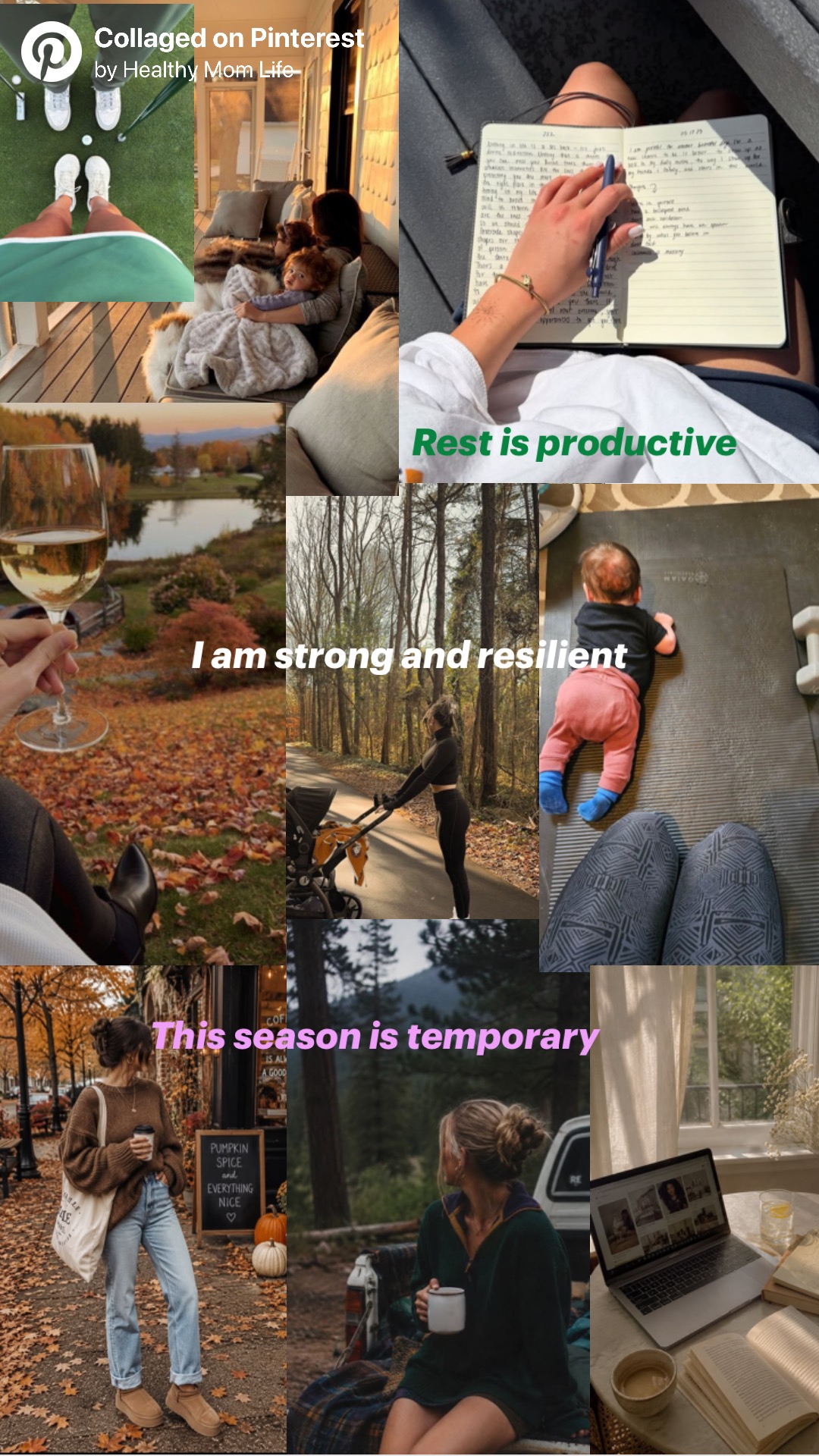
    Before I got pregnant, I loved creating a new vision board every month. I would fill it with images of outfits, hairstyles, goals, motivational quotes, and anything else that matched the energy I wanted to bring into that month. I especially enjoyed creating them as the seasons changed because they helped me get excited for upcoming holidays and experiences.

    So, naturally, I created a postpartum vision board.

    I designed it to help guide me through the fourth trimester and remind me of the kind of parent—and person—I want to be during this season of life.

    I also wanted to start focusing on all the amazing things we’ll get to do as a family. And, if I’m being a little selfish, now that I’m no longer pregnant, I have personal goals, hobbies, and fitness goals that I’m excited to gradually return to when the time feels right.

    During pregnancy, it can be incredibly easy to devote so much time to preparing for the baby that we spend less time thinking about what we want our own postpartum experience to look like. We research baby gear, prepare nurseries, make hospital bag lists, and learn about labour—but many of us don’t spend the same amount of time considering what we’ll need after the baby arrives.

    Classic mothers putting themselves last.

    That’s where a postpartum vision board can help.

    A vision board can be a reminder that, while caring for a very dependent little person is an important part of this season, you are still a whole person with needs, interests, goals, and dreams of your own.

    After my first baby, I experienced the baby blues, and after my second, I experienced postpartum anxiety. This time, I wanted to be intentional about creating reminders of the things that bring me joy and help me feel grounded. For me, having something positive to look forward to—or something that reconnects me with what matters—can be helpful during the more challenging days.

    I’m not suggesting that your vision board should be filled with images of “perfect” motherhood moments or pressure to “bounce back” to your pre-pregnancy body.

    Instead, let’s create something positive, fun, realistic, and meaningful—something that reflects what you value and helps you feel good about the season you’re in.

    If you’ve never made a vision board before, don’t worry. And if you’re not sure what goals, intentions, or aspirations to include, this post will help guide you.

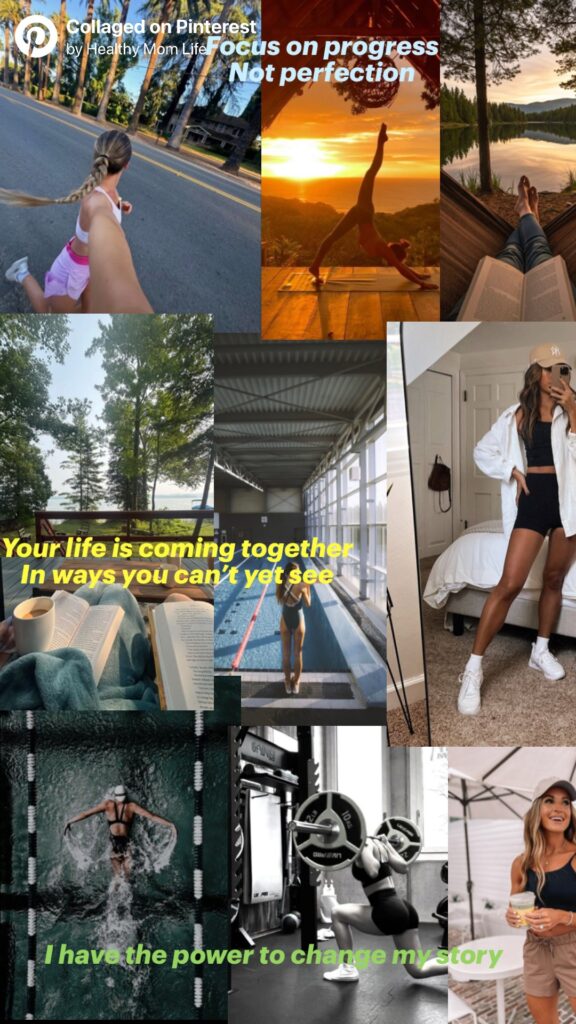
    Follow along to learn how to create your own postpartum vision board using Pinterest.

    What Is a Postpartum Vision Board?

    A postpartum vision board is a collection of images, words, quotes, intentions, and reminders that represent how you hope to experience the first few months after your baby arrives.

    Rather than focusing on losing weight, returning to your pre-baby routine, or accomplishing as much as possible, a postpartum vision board can focus on your values, priorities, and the feelings you want to carry through this season.

    Your board might include themes such as:

    • Prioritizing rest and nourishment
    • Connecting and bonding with your baby
    • Building confidence in your parenting and yourself
    • Embracing simplicity
    • Remembering that this season is temporary and meaningful
    • Creating family memories
    • Supporting your mind, body, and overall well-being
    • Making space for self-care and your own needs
    • Reconnecting with creativity and personal interests
    • Practising patience and gratitude
    • Setting gentle goals and finding motivation

    The purpose isn’t to control the postpartum experience or create another list of things you need to accomplish.

    Instead, your vision board can act as a compass when life feels overwhelming. It can help reconnect you with the values and priorities you want to carry through this season.

    For me, C-section recovery has sometimes felt like two steps forward and one step back. Having a vision board has helped me focus on the bigger picture instead of becoming discouraged by the smaller setbacks that can happen during day-to-day recovery.

    How to Create a Postpartum Vision Board

    Step 1: Choose How You Want to Feel

    Before searching for images, start by thinking about how you want to feel during the fourth trimester.

    You might ask yourself:

    • What kind of parent do I want to be during this season?
    • What do I want to prioritize?
    • What helps me feel like myself?
    • How do I want to feel physically and emotionally?
    • What support will I need?
    • What does a good day look like for me right now?
    • What do I need to make my goals or intentions realistic?

    Your answers can help you identify an intention or theme to guide your vision board.

    I recommend choosing one main intention, although you could choose two if they complement each other. Keeping your focus narrow can make your board feel more meaningful and less overwhelming.

    You can create your own intention or search for one that resonates with you.

    Some examples include:

    • I will embrace this season one day at a time.
    • Rest and connection are my priorities.
    • I can care for my family while caring for myself.
    • Small steps still count.
    • I don’t have to do everything to have a meaningful day.

    Step 2: Identify Your Priorities

    Next, think about the areas of life that matter most to you during the fourth trimester.

    Here are a few categories to use as inspiration.

    1. Physical Recovery

    • Rest
    • Nourishing meals
    • Hydration
    • Gentle movement when appropriate
    • Giving yourself time to heal

    2. Mental and Emotional Well-Being

    • Journaling
    • Therapy or counselling
    • Quiet time
    • Asking for help
    • Spending time outdoors
    • Creating moments of calm

    3. Family Life

    • Family walks
    • One-on-one time with older children
    • Connecting with your partner
    • Creating simple family memories
    • Finding new routines together

    4. Personal Identity

    • Reading
    • Writing
    • Painting
    • Creative projects
    • Hobbies that help you feel like yourself

    5. Career and Future Goals

    • Future projects
    • Business ideas
    • Professional development
    • Long-term dreams
    • Goals you may want to work toward later

    Remember: your vision board doesn’t need to be ambitious. It simply needs to reflect what matters to you in the present moment.

    You also don’t need to choose something from every category. Use these ideas as a brainstorming tool and select only what feels meaningful and realistic for your life.

    And don’t be afraid to change your vision board. If your priorities shift or something you originally included no longer feels aligned with your life, update it.

    It’s your board. Play around with it until it feels right.

    Step 3: Gather Images and Inspiration

    Now for the fun part!

    Search Pinterest, magazines, or your own photos for images that reflect the postpartum experience you hope to create.

    Try to look for images that evoke a feeling rather than represent perfection. The images should feel positive and capture the overall atmosphere or “vibe” you want for this season.

    You might include:

    • A parent resting with their baby
    • A cozy reading nook
    • Family walks outdoors
    • Nourishing meals
    • A journal and a cup of coffee
    • Creative hobbies
    • Supportive friendships
    • Peaceful walks in nature
    • A cozy home environment
    • Seasonal activities you’re looking forward to

    I like searching for “[vibe] aesthetic” on Pinterest because it often brings up beautifully curated images.

    For example, I’m looking forward to walking in the fall with a latte and my baby. I might search:

    “Walking in fall aesthetic”

    Then I can browse the images and save the ones that capture the feeling I’m looking forward to.

    Step 4: Add Gentle Reminders

    Along with images, add affirmations, intentions, quotes, or reminders that you may want to see on difficult days.

    These phrases might resonate with you:

    • Rest is productive.
    • This season is temporary.
    • I don’t need to do it all.
    • Small steps still count.
    • My worth is not measured by my productivity.
    • I can ask for help.
    • I am allowed to take up space in my own life.
    • Today does not have to be perfect to be meaningful.
    • I can take this one day at a time.

    These reminders can help you reconnect with your priorities when you’re tired, overwhelmed, or having a difficult day.

    Step 5: Create Your Collage

    Using Pinterest, save the images you like to a board.

    When you’re ready to create your collage:

    1. Open Pinterest and select the images you want to use.
    2. Tap the three dots below an image.
    3. Select “Add to collage.”
    4. Arrange your images in a way that feels visually balanced.
    5. Add your intention, affirmations, or other text.
    6. Adjust the text size and colour so it is easy to read.
    7. Export your finished collage.

    There’s no right or wrong way to arrange your vision board. You can create something colourful and energetic, soft and calming, minimalist, seasonal, or completely unique to you.

    Step 6: Put It Somewhere You’ll See It

    Your vision board is most useful when you can easily revisit it.

    If you want to keep it private, you can leave it on Pinterest or print it and place it somewhere you’ll see regularly, such as:

    • Your bathroom mirror
    • Your bedroom
    • Your office or workspace
    • Your journal
    • The inside of a closet door

    My personal preference is to use my vision board as my phone background. That way, every time I pick up my phone—whether I’m checking the time, scrolling during a late-night feed, or doing a little online shopping—I see a reminder of what I want this season to feel like.

    The goal isn’t to complete everything on your vision board.

    The goal is to create a visual reminder of the values you want to guide you through this season.

    Final Thoughts

    The postpartum period rarely goes exactly as planned.

    Babies have their own timelines, every recovery is different, and even the day-to-day experience of the fourth trimester can be unpredictable.

    One day, you may feel like you’ve figured everything out. The next day, your baby may be on an entirely new schedule, you may be running on very little sleep, or you may feel like you’re starting from scratch.

    That’s okay.

    Creating a postpartum vision board can help you enter this season with more intention, clarity, and compassion for yourself.

    Instead of focusing only on what you want to accomplish, consider focusing on how you want to feel.

    Sometimes, in the thick of the fourth trimester, that can be the most powerful reminder of all.

    Related posts: [Easy Things You Can Do to Help Yourself Through the Baby Blues] | [Week 1 C-Section Recovery Checklist] | [46 things to do on your phone postpartum]


  • Easy Things You Can Do to Help Yourself Through the Baby Blues

    Easy Things You Can Do to Help Yourself Through the Baby Blues

    When I had my first baby, I was incredibly prepared for the newborn stage. I had the diapers stocked, the clothes washed, and everything ready for my baby. What I wasn’t prepared for was the hormone crash about a week after giving birth that had me crying on the phone to a public health nurse for no clear reason. I’d heard the term “baby blues” during pregnancy, but I didn’t truly understand what it meant until I experienced it myself.

    One moment you can feel incredible and on cloud 9. Like “I can’t believe I just birthed this beautiful thing and grew them in my body!” And the next you might be crying at an emotional poignant commercial. Or maybe you’re sad you’re not pregnant anymore and are grieving the passing of that stage of your life. Maybe you’re hyper fixated on one particular component of your healing. Or maybe you’re still processing the birth of your baby and there is some trauma associated with it. 

    The sleep deprivation and the changing hormones really create the perfect storm for moms to be on an emotional roller coaster ride. Add in other children to take care of, a healing body, possible breastfeeding challenges, the adjustment of taking care of a newborn, and you’ve got quite the stressful situation. 

    With my first baby, the baby blues really smacked me in the face. With my second, I had postpartum anxiety. For my third baby, I wanted to be as prepared as possible for the mood shifts. Around my 5th day postpartum with my third, I started noticing that I could have an amazing morning where I felt happy, confident, and grateful—and then later that day feel anxious, overwhelmed, or emotional.

    So I created a list of easy things that I could do to help myself through the baby blues whenever I felt my mood getting low. 

    Sometimes, the smallest things can make a big difference.

    While these strategies won’t treat postpartum depression or postpartum anxiety, they can be helpful ways to support yourself through the normal emotional ups and downs many mothers experience in the first couple of weeks after birth.

    But first, recognize when you’re starting to feel low.

    The most important thing I want to share that’s been a game changer this time around for me, has been my ability to recognize that my mood is starting to dip. Once I feel myself get low and teary, I know I’m going through an episode of the blues. Then I either vocalize it to my support system (my mom, my husband, my sister, or even just out loud), and then I pick something from my list. Just putting a name to your feelings gives you the power to acknowledge that this feeling is transient and that you will get through it. 

    Baby blues affect up to 80% of new mothers and are thought to be caused by the rapid drop in estrogen and progesterone after birth, combined with sleep deprivation, physical recovery, and the enormous adjustment of caring for a newborn.

    My Beat-the-baby-blues list: 

    1. Eat something before assuming it’s your mood

    One of the easiest things to overlook postpartum is basic nourishment. Not only do you need more calories to recover from birth, if you’re breastfeeding you need to up those calories even more to accommodate your supply. If you’re missing meals, which is easy to do when caring for a newborn, you’re setting yourself up for low energy, hunger, and dehydration that can make things feel more overwhelming. 

    Before you assume you’re having a terrible day, and the feelings of doom and gloom are forever, try checking in with yourself:

    Have I eaten recently?

    Have I had enough water?

    Have I had any protein today?

    Sometimes a snack and a big glass of water go a long way in helping you feel better. 

    2. Get outside, even for a few minutes

    Sunlight is so important for mood. Even just a little bit throughout the day can make a huge difference.

    Open the door. Sit on your porch, even sitting outside for ten minutes with your baby “counts”. Take a slow walk around your driveway or block if you feel up to it.

    Fresh air and natural light can also help break up the feeling of being stuck inside, especially during those long newborn days.

    Also note that on days that are rainy or grey, you might feel your mood slipping for this reason. Recognize that it might happen and make sure you have a plan (I.e choose another option on this list).

    3. Change out of your pajamas

    There is absolutely nothing wrong with spending a day in comfortable clothes postpartum. Wear your ugliest shorts and your most milk-stained shirt! 

    But sometimes putting on a clean outfit, brushing your hair, washing your face, or putting on a hint of makeup can help you feel more like yourself and more confident. 

    It’s about reminding yourself that you are still a person outside of your role as a mom. You’re still a part of society and it helps to set yourself up for the rest of the day. 

    4. Do one small thing that makes you feel like you

    The newborn stage can feel like your entire identity is just keeping a small potato alive. Try to incorporate one small thing in your day that is for you. It could be: 

    Reading a few pages of a book.

    Listening to a podcast.

    Making your favourite coffee.

    A skincare routine.

    Watching a comforting or light-hearted show.

    Sitting outside for five minutes.

    It doesn’t have to be super productive. It just has to remind you that you’re still you and it should be something that “fills your own cup”, even if that’s only for a few minutes.

    5. Stop the comparison spiral

    The postpartum internet can be a difficult place. It’s easy to compare your day 1 to someone else’s day 30. Especially when social media is a highlight reel. 

    Every postpartum recovery looks different, even between pregnancies. It’s ok if you’re still recovering or if you’re not as far in your healing as you would have expected. 

    Give yourself grace and love. You’re on no one’s timeline but your own. Check out my post on “things to do on your phone postpartum that aren’t scrolling social media” if you’re looking for inspiration for alternative activities you can do. 

    6. Limit the postpartum Google rabbit holes

    Oh boy, I love a good deep dive into asking ChatGPT or Google all my questions. However, sometimes I come out feeling like I wasted 45 minutes and my anxiety is worse. Like I need to go to the ER right now. 

    I know it’s tough because postpartum comes with so many questions and every baby has different needs. But while searching for answers helps, there is a danger that it creates more anxiety and confusion. 

    Before going on a new internet search try asking yourself these two questions:

    “Do I need this information right now, or can this wait?”

    “Is this something I should speak to a medical professional about instead?”

    Sometimes the answer is that you need reassurance from a trusted healthcare provider and not another hour scrolling online.

    7. Let someone else help

    As a self-proclaimed independent woman, this is tough. Many new moms struggle with accepting help because they feel like they should be able to handle everything. 

    But postpartum is not the time to prove that you’re superwoman. 

    Let someone make you food.

    Let someone hold the baby while you shower.

    Let someone entertain your older children.

    Let someone fold the laundry.

    Support is not a sign that you’re struggling. Support is part of recovery. And when you frame it that way, you’ll appreciate all the people you have in your corner. 

    Similarly, learn to let go of perfection. It’s ok if the house is a mess, the dishes aren’t washed, and the laundry is piling up. As long as everyone is being loved and they’re happy, that’s all that matters right now. 

    8. Get a little connection every day

    As the newborn stage can be isolating, incorporate small moments of human connection if you can: 

    Send a text to a friend. You can just say “thinking of you”. 

    Call someone who makes you feel good.

    Talk to another mom who understands.

    Wave to a neighbour or say “hi” to someone walking on the street. 

    You don’t need a long social outing. Even a few minutes of connection can remind you that you’re not alone. Honestly, just having a conversation with the barista at a coffee shop can be enough.

    9. Set a loose schedule

    I’m someone who sort of starts to fall apart without structure so I love having a bit of a loose schedule throughout the day. For example:

    Morning: walk with babe and listen to a podcast.

    Mid-morning: Do my rehab exercises and baby does tummy time

    Lunch: eat and relax with a show

    Mid-afternoon: second walk with an audiobook or try to nap if I can

    Then, my kids come home and I make dinner, we play, and then I get them ready for bed.

    I find ChatGPT especially helpful for this. Your prompt could be something along the lines of “create a loose daily schedule for me from Monday to Friday while I’m on Maternity leave. I need to do X and Y daily. I’d like to schedule time for this activity and this activity if I can”. Then refine as needed. It’s just a loose schedule so you can edit as you please, but it helps take out the overwhelm with trying to fit everything into your day or the guilt you feel if you don’t do something. 

    If schedules make you feel pressured, skip this one. This tip is for moms who feel calmer with a little structure.

    10. Self-care as preventative medicine

    I think it’s important to prioritize some form of self-care during this time. This could be making sure you have a daily shower or maybe it’s incorporating your favourite hobby into a nap window. Whatever it is, make sure to sprinkle it in during your week and treat it as a non-negotiable. 

    A note about affirmations

    When everything feels chaotic, having one sentence you repeat to yourself can interrupt anxious thoughts.

    When your baby is crying, your other kids are asking when dinner is, and you are exhausted, having a phrase that you repeat can be so helpful. You could say “I’ve got this” or “this season is so short” or “I’m the best mother I can be in this moment”. 

    Positive affirmations can help the negative spiralling and conversations happening in your head. I think of them as a little self-care boost for your thoughts.

    Bonus: have older children in a program or daily care if possible.

    This isn’t always possible, and I recognize that this isn’t an option for every family. But having my older children in daycare provides them with some structure and daily stimulation that has been incredibly helpful. It also gives me the opportunity to devote all my attention to the baby and my recovery. Even if your older children are able to be away for a couple days in the week or if a relative can watch them for a day, it would be so helpful for you. 

    When baby blues become something more

    Baby blues are very common and often improve within the first couple of weeks after birth. If you’re in the thick of it right now, just know that these feeling will ease and you will start feeling more like yourself soon. 

    However, if feelings of sadness, anxiety, hopelessness, or being overwhelmed feel intense, are getting worse, are lasting beyond 2 weeks, or are making it hard to function or care for yourself or your baby, reach out to your healthcare provider. You deserve support and it’s not a weakness to ask for help. 

    If you’re ever worried about your safety or your baby’s safety, please seek medical attention immediately.

    Final thoughts

    The postpartum period can be beautiful and incredibly difficult at the same time.

    You can love your baby deeply and still miss your old routine.

    You can feel grateful and still feel overwhelmed.

    You can be happy and still have hard days.

    When the baby blues hit, don’t ask yourself, “What is wrong with me?”

    Try asking:

    “What is one small thing I can do to support myself today?”

    Sometimes that one small thing is enough to help you get through the next hour, the next feed, and the next day. 

    You’re not a failure as a mother. You’ve just been through one of the biggest physical and emotional transitions of your life. You’re adjusting to your new normal and you will get through this.

    Related posts: [Hey Mom, get a Hobby!] | [Week 1 C-Section Recovery Checklist] | [46 things to do on your phone postpartum]
  • Why So Many Moms Feel Like They’ve Lost Themselves (And How to Reconnect)

    Why So Many Moms Feel Like They’ve Lost Themselves (And How to Reconnect)

    As of today, I’m 37 weeks and 3 days pregnant. It’s insane to me how pregnancy is full of dichotomies. One day it feels like it’s flashing by and the next it feels like it’s dragging and I can’t wait to meet my baby. It’s full of excitement and happiness, but also full of anxiety and fear of things to come.

    Right now, I’m feeling in this weird rut. I’m looking forward to finishing work next week, but I’m also a bit sad to say bye to my current routine. Moving has also become harder, and I need to monitor my activities levels this pregnancy so that I don’t crash by 6:30 pm when my kids still need me to help get them ready for bed.

    Overall, I feel like my life is on pause until my baby makes their arrival. I’m not able to make any concrete plans for the summer because I’m not sure how my recovery will be, and I’m not able to set my usual fitness goals for myself because of how pregnant I am.

    I’m in this weird stage, that I think a lot of pregnant women get to, where you’re starting to get ready for the next chapter (post-partum). It’s been so long since I’ve felt like myself that I’m starting to miss the person I was before I became pregnant, and I’m getting excited to get back to her again.

    Why many moms feel this way

    The number one thing I didn’t really fully understand before having my kids was how dependent they would be on you for every little thing. If you’re going from taking care of only yourself (or a dog/cat), it can be a lot to get used to.

    Motherhood is a very selfless job. You put the needs of your children first, not just because you have to, but often because you want to. You end up loving these crazy little monkeys with your whole being and you want everything for them.

    However, what some women find is that in this caregiver role, you might start to “miss yourself”. You start to miss the sense of identity, independence, and freedom you once had. Not because you regret becoming a mother, but because those parts of you matter too.

    Especially with babies and toddlers, much of the day revolves around meeting someone else’s needs. Feeding, appointments, naps, childcare logistics, household management. It can feel like there is very little space left for your own interests.

    Many mothers don’t necessarily miss being child-free. They miss having parts of themselves that existed alongside motherhood.

    Why it’s normal

    Having children changes your life faster than your identity can adapt.

    Pregnancy, birth, and caring for babies can transform daily life almost overnight. Your routines, priorities, relationships, body, sleep, work, and free time may all change at once.

    Meanwhile, your sense of self doesn’t update instantly. You may still internally feel like the person who had hobbies, goals, spontaneous weekends, or a certain career trajectory, even if your days now look completely different.

    Pregnancy and postpartum also changes how your body, looks, feels, and functions. Even knowing and accepting these changes can still create a sense of loss or discomfort. Your body might not feel like it belongs to you especially if you’re breastfeeding.

    During pregnancy, people constantly check on you. They ask how you’re sleeping, how you’re feeling, and whether you need anything. Then the baby arrives and suddenly the spotlight shifts. It’s natural and understandable, but it can leave some women feeling like they’ve disappeared into the background of their own story.

    Small ways to reconnect with yourself

    Here are a few small things you can do right now to “find yourself again”:

    1. Stop waiting to become your old self again

    The old version of you isn’t gone, but she has changed. Motherhood adds layers to who you are. Instead of trying to become your pre-kid self again, my advice is to focus on getting to know the person you’ve become. You’re part of the mom club now, and you’re doing badass things.

    2. Reconnect with interests, not just responsibilities

    I’ve written a blog post about moms getting a hobby (linked here!) and I strongly stand by it. Moms need hobbies, and kids need to see their mom with interests and a life outside of their family.

    3. Create something that belongs only to you

    I started this blog as an outlet for myself and it’s slowing growing into something that I’m very proud of. Find your own outlet; this could be a garden, a fitness goal like a marathon, painting, or reading. Try a bunch of things that you’re interested in and remember that you’re a person with thoughts and ambitions of your own.

    4. Don’t actually put your life on hold

    I need to listen to this right now. While I feel like I’m on hold because I’m pregnant, I’m really not. I can still play with my kids, I can still set fitness goals, and I can still have fun. Things might look slightly different, but that’s all part of this big, beautiful life!

    I keep trying to catch myself from saying things like “oh, when the baby is a year old, I’ll do x….” or something similar. Because the reality of the situation is, there is no magical date or timeline. You either do it or you regret not doing it later. Take the course, go on that vacation, see your friends.

    5. Take care of the body you’re in now

    Please, please, buy clothes that fit and get rid of the ones that don’t or make you feel gross. I feel a million times better in something that’s comfortable and cute, rather than something I wore when my body was smaller. Rock the larger size or the high-waisted jeans. You look like a million bucks.

    Also, and I stand by this 100%: wear the bikini. Who cares what anyone else thinks. All bodies are beautiful and you deserve to not get weird tan lines because you’re afraid of what some joe-smoe might be thinking. Spoiler alert: they’re probably not even thinking of you. Being a mom sometimes comes with scars, stretch marks, and loose skin. These things are truly beautiful and a testament to the amazing things your body can do.

    Also, invest and prioritize fitness and mobility. There is always space for you at any gym and getting stronger is sexy.

    6. Let yourself be more than one thing

    Motherhood is most likely the most important role in your life, but it doesn’t have to be the only one. You can be a devoted, caring mother, and also a badass, ambitious, interesting person. Don’t box yourself in.

    What I’ve learned in this season

    There is a reason “mom glow-up” Instagram reels and tik-toks are so popular. Moms are looking for ways to get their spark back and reconnect with themselves in the new season of life that they’re in.

    Primarily, what I’ve found to be the most helpful mind-set change for me is to acknowledge that I’ve changed, and that I’ve changed for the better. I’m less concerned about what people think of me, and I will voice my opinions especially when it comes to my kids. I’ve learned to prioritize the things that truly matter in my life, since I don’t have time for things that drain me. I’ve also come to appreciate the little things my children do for me or the funny things they say. Hanging out with them right now is really fun for me.

    Don’t get me wrong, I do crave some adult company and would love to just chill on a patio with no responsibilities for a little bit. But I truly love my kids and I’m soaking up this crazy bananas season of life I’m in.

    Being pregnant with my third baby has shifted my perspective even further. I know I felt like I was losing myself in my last pregnancy and I ended up loving myself even more a year postpartum. I have the wisdom right now to know that it will be a slow process to get back to that feeling, but I have the experience to know that it will come. Kids are so small for such a short period of time, and trust me, it does get better.

    There is so much to look forward to with your littles and there will come a day where you realize that you don’t feel overwhelmed, overstimulated, or resentful. You’re just happy. You’re happy that you created the life you did and you’re proud of yourself for all those long nights and cuddles you gave your kids. Because they’re the best kids ever, and it’s all thanks to you. Motherhood changes you, but it doesn’t erase you: you were just growing into someone new.

    Related posts: [Hey Mom, get a Hobby!] | [Mid-Week Pick-Me Ups for Busy Moms] | [Ways I Stopped the Negative Self-Talk Spiral and What to Model for my Kids]

  • How I’m Preparing for My Third C-Section: What’s Different This Time (And What I’m Not Stressing About)

    How I’m Preparing for My Third C-Section: What’s Different This Time (And What I’m Not Stressing About)


    A quick note: I wrote this a while ago and have just now gotten around to posting!

    With the countdown now less than 60 days until my third c-section, everything is starting to feel very real. I’ve finally typed the date into our shared family calendar. I’ve started mentally mapping out childcare logistics and oh boy, I’m getting nervous. It’s finally hitting me that we’re going to be back in the newborn stage soon.

    Even though this will be my third c-section and my second scheduled one, it’s still a pretty big deal. Major abdominal surgery is major abdominal surgery, no matter how many times you’ve done it. And knowing what will come is both a blessing and a burden. On one hand, I feel like something of an expert on the recovery and returning to regular activity. On the other hand, I know exactly what’s ahead.

    I do want to quickly say to any mom who might be having mixed feelings about a scheduled or repeat c-section: everything you’re feeling is completely valid. You can feel sadness and gratitude at the same time. You can feel like your body failed you or that you did not give birth “in the right way”. Overtime, I’ve come to love my c-section scars that gave me my babies. But it’s been a journey and I’m still processing my own experience. Give yourself permission to feel all of it.

    Also: my birth is not your birth. Please don’t let someone else’s story (especially the dramatic 12-stitches tear birth story) cloud your experience before it’s even happened. Sometimes the most dramatic stories can be the loudest ones.

    I come from a very strong science background (Master’s of Science degree and years in clinical research), and I’ve had two previous c-sections. Here’s exactly what I’m doing – physically, practically, and mentally – to give myself the best shot at a smooth surgery, a straightforward recovery, and a relatively sane transition from two kids to three.


    Part One: Getting My Body Ready

    Why physical prep matters more for a repeat c-section

    Physical fitness going into any surgery matters — but for a repeat c-section specifically, each subsequent surgery involves cutting through scar tissue from previous ones, which can make the procedure longer and recovery more complex. Going in as strong as possible gives your body the best foundation to heal from. This is the basis for everything I’ve been doing in my third trimester: training for surgery and recovery, not performance.

    I want to acknowledge that being pregnant and trying to stay strong is genuinely hard. I love pushing myself in the gym. I love feeling athletic and capable. Pregnancy has humbled me in every way — I’m weaker, I’ve gained weight (a good thing!), I get winded easily, and my recovery from any workout is significantly slower. Reframing what movement means right now has been huge: it’s not about performance. It’s about preparation.

    Posture

    Posture becomes critically important in the third trimester as your centre of gravity shifts forward with your growing bump. Poor posture heading into surgery can contribute to back pain during recovery and make it harder to move comfortably in those early post-op days. I’m consciously working on keeping my shoulders back, my ribcage stacked over my pelvis, and not letting my lower back overarch. Simple daily habit: every time I sit down at my desk, I do a quick posture check. Two seconds, real difference.

    The big muscles: glutes, back, and core

    These three muscle groups are the most impacted by pregnancy and c-section recovery, and the ones I know from personal experience I need most in the postpartum period.

    Glutes: Strong glutes support your pelvis, reduce lower back strain, and are essential for the functional movements of early postpartum life — getting in and out of bed, climbing stairs, picking things up from the floor. After a c-section, you won’t be able to engage your core normally, so your glutes become even more important as a primary stabilizer.

    Back: Carrying a baby, nursing, and the awkward sleeping positions of late pregnancy all take a toll on your upper and lower back. Building back strength now means you’re heading into the postpartum period with more resilience.

    Core (specifically deep core and pelvic floor): Even though you’re having a c-section and not a vaginal birth, your pelvic floor is still under significant pressure from carrying a pregnancy. And your deep core — the transverse abdominis — is the muscle that will be cut and repaired during surgery. Activating and strengthening it before surgery, through breath work and gentle core engagement, has been shown to support faster recovery afterward. I’ve been trialing the Bloom Method for this and finding it really helpful for cues on engaging my deep core without creating intra-abdominal pressure.

    Daily movement and nutrition

    I’m keeping my workouts to 20–30 minutes, focusing on consistency over intensity. Right now, I’m doing a mix of bodyweight work, light strength training, Pilates-inspired movements, and a weekly swimming session that I’ve completely fallen in love with. (Haven’t read my swimming post yet? Check it out here!)

    On the nutrition side, I’m being as specific as I can because I find most c-section prep content glosses over it. Iron matters significantly going into surgery due to blood loss — I’m taking my supplement consistently paired with vitamin C for absorption, and prioritizing iron-rich foods. Protein at every meal supports muscle maintenance and gives my body the building blocks for tissue repair. Hydration — dehydration heading into surgery can affect anaesthesia and recovery. I keep a large water bottle on me at all times and add electrolytes when I have them.

    What I’m not stressing about:

    The weight gain and the muscle loss. I have the rest of my life to address both, and I know from experience that I came back stronger after my second c-section than I was before my first pregnancy. Right now, my only job is to prepare as well as I can for what’s ahead.


    Part 2: Getting My Life Ready

    Logistics and childcare

    The best thing about a scheduled c-section is that you know the date. That makes logistics infinitely more manageable when you have other children depending on you. I’ve coordinated childcare for my two toddlers for the day of surgery and the days following, with my parents staying nearby to help. If you have older kids, get this locked in as early as possible — it is one of the biggest sources of mental load in the final weeks.

    Preparing my toddlers

    This has been one of the most intentional parts of my prep. A few things that are working:

    Framing the baby as “their” baby. We talk about “our baby” constantly. My toddlers touch my belly, talk to the baby, and we’ve made sure to frame it as something exciting that’s happening for them.

    Talking about mommy’s “boo-boo.” I’ve explained in simple terms that mommy will have a boo-boo on her tummy and won’t be able to pick them up for a while. We’ve been practicing walking and holding hands instead, which my youngest has surprisingly embraced during her current independent phase.

    More daddy time. I’ve intentionally organized more one-on-one time between my husband and our daughter so she’s comfortable with him as her primary caregiver during my early recovery.

    After my second c-section, not being able to lift my firstborn was genuinely one of the hardest parts emotionally. I want to set everyone up better this time.

    Setting up for recovery at home

    Before I leave for the hospital, I’m setting up my bedroom so I can roll out of bed with minimal core engagement — extra pillows for an inclined sleeping position, a clear path to the bathroom, and everything I need within arm’s reach. I’m also creating supply stations beside the bed and on the couch so I’m not walking to another room for anything in week one. Small setup, enormous difference.

    Since I’m taking more time off work before my due date this time, I’m also planning to batch cook and freeze meals while my toddlers are at daycare — simple, nutritious, high in iron and protein, re-heatable.

    For the hospital bag, check out my post on my minimalist hospital bag checklist for Ontario moms including a c-section specific section — link here. Short version: you need less than you think.

    What I’m not stressing about

    Leaving my kids for the hospital stay. After my second c-section I was so anxious to get home to my son that I pushed to leave early — and ended up back in the ER ten hours later with trapped air from the surgery pressing on my diaphragm, struggling to breathe. Talks of emergency surgery with a brand new newborn in my arms is not something I’m in a hurry to repeat. This time I’m staying as long as the hospital will have me. My kids love their grandparents. They will be okay.


    Part Three: Getting Myself Mentally Prepared

    The strange anxiety of knowing exactly what’s coming

    I want to name something undertalked about in the repeat c-section community: the anxiety of knowing. With a first c-section, you’re scared of the unknown. With a repeat, you’re scared of the known. You remember the shaking on the operating table, your arms being strapped down, the pressure and the pulling, the first time you tried to sit up afterward. That is a different kind of anxiety and it deserves to be acknowledged.

    Visualization

    I’ve been using visualization the way an athlete would before a big competition — closing my eyes and walking through the surgery: the spinal, the pressure, the moment I hear the baby cry. I picture a smooth procedure, a calm operating room, a healthy baby, a recovery that goes as planned. Research on surgical outcomes consistently shows that mental preparation and positive visualization are associated with better recovery experiences. This is not woo — it is evidence-based practice.

    Journaling prompts that are actually helping me

    • What am I most afraid of, specifically? Is the fear based on something that actually happened before, or is it anticipatory?
    • What went well in my previous recovery that I want to repeat?
    • What do I wish I’d done differently that I can change this time?
    • What does a “good” fourth trimester look like for me and my family?
    • What if the best-case scenario happens instead of the worst. What would that look like for me?
    • What am I most looking forward to in the hospital? What do I most want to remember about this time?

    Leaning on my support system

    My parents being nearby after the surgery is something I don’t take for granted. If you have people who have offered to help — let them. Give them specific jobs: a meal, a toddler pickup, a grocery run. People want to help and they do it better when you tell them how.

    I’ve also intentionally bought comfortable, high-waisted recovery clothing I actually like (Athleta has been my go-to for cute leisure clothes, but Amazon has been great for cheap finds like these shorts and these tank tops). After my second c-section I wore whatever was around and felt frumpy for weeks. This time I have soft, stretchy pieces that sit above my incision and make me feel like a person rather than a patient. It sounds small. It isn’t.

    Amazon Basics Tank Tops
    Athletic Shorts from Amazon

    What I Wish I’d Known Before My Second C-Section

    • The scar will likely look the same as your first after it heals — don’t panic in the early weeks
    • Sensation loss is common and often temporary — give it a full year before drawing conclusions
    • The “misshapen” stomach look in early recovery is swelling — it resolves
    • Trapped gas pain can radiate to your shoulder and feel terrifying. Chew gum, walk laps around the ward, and it will pass. Knowing it might happen makes it significantly less scary.
    • There is no gold star for going home early from the hospital. Stay as long as they’ll have you.
    • You will come out the other side stronger than you went in — I genuinely believe that, because it happened to me

    How I’m Feeling: Ready (Mostly)

    I’m somewhere between excited and wistful, and I’m letting myself be both.

    This is my last pregnancy. I’ve been either pregnant or with a baby since 2021 and there’s something bittersweet about closing that chapter. But there’s also something beautiful about going into it with experience — knowing that the fears I have now will be a memory in a year, that the baby phase moves faster than you can believe, and that the snuggles in those first few weeks are unlike anything else in the world.

    I’m ready to meet this baby. I’m ready to see my toddlers become big siblings. And I’m as prepared as I know how to be. 💛

    This post is based on my personal experience and research background — it is not medical advice. Always consult your OB, midwife, or healthcare provider about your specific situation.

    Related posts: [Ontario Hospital Bag Checklist] | [My Prenatal Swimming Obsession] | [The Living Room Workout I Do With Toddlers Around]

  • Prenatal Lap Swimming for Beginners: Why I’m Obsessed in my Third Trimester (+ A Simple Swim Workout to Try)

    Prenatal Lap Swimming for Beginners: Why I’m Obsessed in my Third Trimester (+ A Simple Swim Workout to Try)

    I don’t know about you, but it feels like spring is just zooming by! At almost 30 weeks pregnant, it’s really hitting me how quickly times flies. Before I know it, baby will be making their grand appearance.

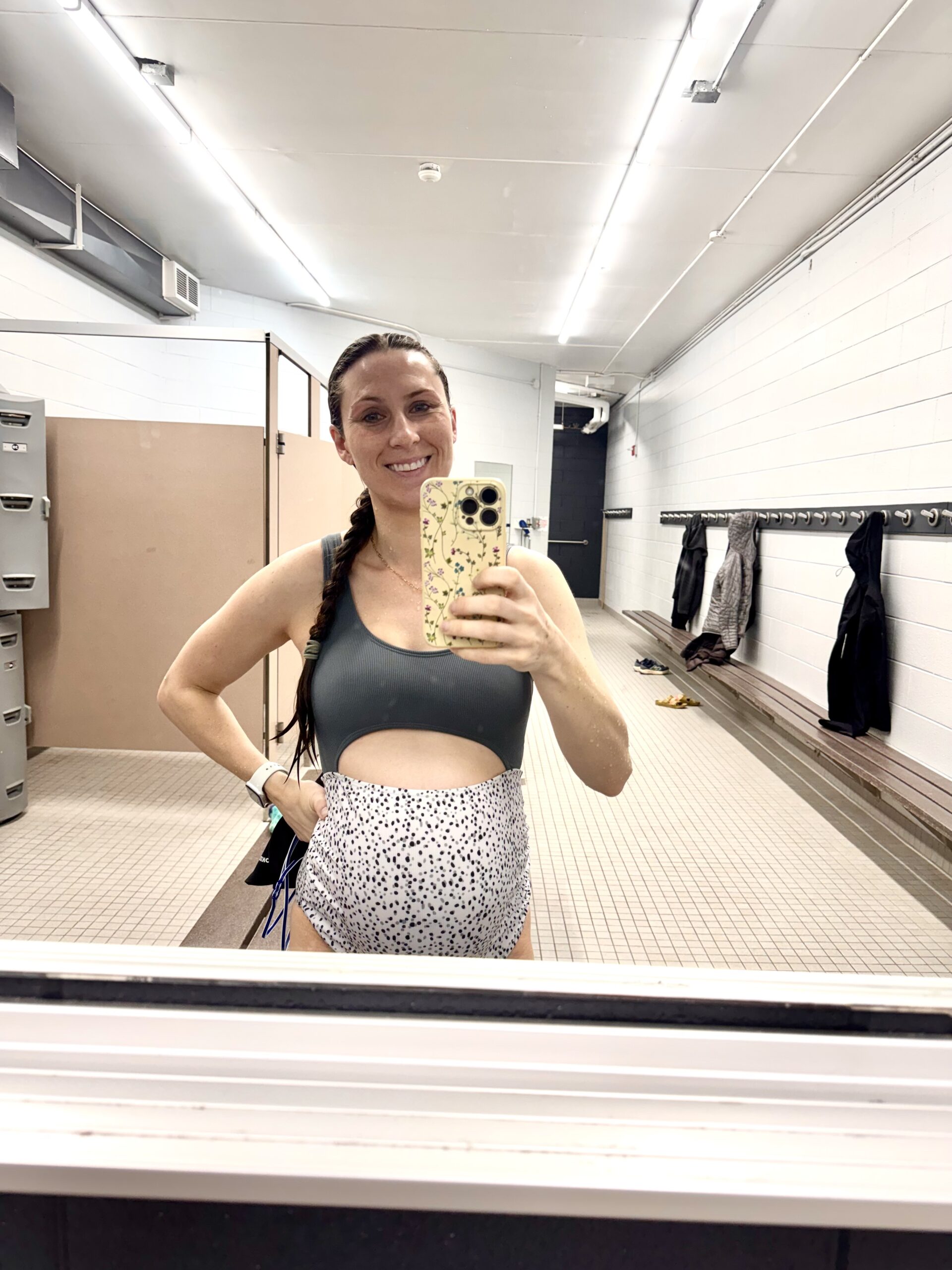
    About a month ago, in a very impulsive fashion, I showed up to my local pool at 26 weeks pregnant with cheap goggles from Amazon, a swimsuit that was doing its absolute best, and approximately zero idea what I was doing.

    And it was one of the best decisions I’ve made this entire pregnancy.

    I dabbled in swimming laps back in university (about ten years and now three kids ago) and I grew up on a lake, but I wouldn’t exactly call myself a seasoned lap swimmer. Lately though, with my belly growing, my back aching, and just wanting to feel athletic again, I kept seeing swimming come up as one of the best exercises you can do during pregnancy.

    Swimming in pregnancy is a low impact, full body cardio workout. It’s gentle on your joints (mine are definitely starting to feel the extra weight) and it’s supportive for your bump.

    So, I requested a toddler-free hour, booked a pool session, packed a bag, and just… went.

    Here’s what happened, why I’m already planning my next session, a simple beginner prenatal swim workout you can try, and hopefully, most importantly, the push to get you in the pool too! Even if you’ve never swum laps before.


    My First Lap Swim While Pregnant

    Honestly, I had zero expectations going in. I gave myself the goal of just swimming slowly in the pool, back and forth. If I wanted to leave after 5 minutes, I could.

    Instead, I stayed for 40 minutes! And I really loved every second of it.

    I was definitely a fish out of water (pun intended), and it took me a few laps before a front crawl started to feel even remotely natural. Coordinating breathing, arms, and legs took some getting used to.

    But the beauty of lap swimming is that you can switch strokes anytime and rest at the end of each lap. There is always a built-in reset.

    And yes, it’s a tougher workout than it looks. My arms, legs, and glutes were feeling it the next day. But in a good way! The kind that reminds you your body is strong.

    For the first time since before this pregnancy, I actually felt a bit like me again.

    To say I was hooked would be an understatement.


    Why Swimming in Pregnancy is so Beneficial

    I have a Master’s degree in Health Sciences and over a decade of experience in clinical research, so I can’t help but look at the evidence when I try something new. I also have so little time, that I want to know what I’m doing is going to be the best use of it.

    And the research on swimming during pregnancy is genuinely compelling.

    Here’s what stands out to me:

    • It’s low impact but high reward. Water supports your body weight, giving your joints a break while still providing an effective cardiovascular and strength workout.
    • It can reduce swelling. The gentle pressure of the water can improve circulation and reduce puffiness—especially in your legs and feet. I always feel noticeably lighter afterward.
    • It supports your back. The buoyancy takes pressure off your spine, which is a huge relief when you’re carrying extra weight up front. This is what initially caught my attention and drew me to swimming in the first place.
    • It’s safe throughout pregnancy. For most low-risk pregnancies, swimming is considered one of the safest forms of exercise from the first trimester right through to the end. As always though — check with your healthcare provider before starting, especially if this is new for you. I had really wanted to do a workout where I wouldn’t have to scale down or second guess how safe the movement was for me.

    The Part Where I Was Intimidated (And You Might Be Too)

    Ok – walking into a lap pool as a beginner is intimidating. Everyone looks like they know what they’re doing. There are different lanes. There are people training for triathlons.

    It’s easy to get in your head and think that you don’t belong. But, I’m here to tell you that you do! You 100% do.

    Here’s what I want you to know:

    **NO ONE CARES**

    I mean that in the best possible, kindest way. Everyone in that pool is focused on their own workout. The slow lane exists for you and for me, and there is absolutely no shame in it. Now that I’m over 30, I find that I’m genuinely enjoying new experiences where I’m a complete beginner. The older we get, it seems like the less we’re placed in those scenarios. So, embrace being the beginner!

    The first lap will feel hard and probably pretty awkward. The second one will feel slightly less hard and awkward. By the fifth one, you’ll start to find a rhythm. And by the time you’re towelling off and heading to your car, you’ll already be thinking about when you can come back and do it all over again.

    I promise.

    My Summer Vision Board – it includes Lane Simming!

    What to Bring (The Beginner Checklist)

    Swimming is great because you really don’t need all that much. You might even have some of what you need already. Here are some suggestions if you want a place to start.

    Here’s what I bought from Amazon:

    1. Maternity Swimsuit: something comfy and cute that I could swim laps in. I bought this one, and I really like it.
    1. Goggles: These definitely make it easier to do a front crawl. Also, you’ll feel like a real swimmer. I bought these goggles and have been happy with them.
    2. Swim Cap: I have long hair, and I wanted to protect it from the chemicals in the pool as much as possible. Bonus, swim caps help prevent water from entering your ears. These are the caps I bought, and so far so good.
    3. Leave in Conditioner: Again, in an effort to protect my hair from getting dry, I coat the ends of my hair with leave in conditioner.

    Here’s what I grabbed from home:

    1. A gym bag to keep my change of clothes in and a towel
    2. A water bottle (obvious)
    3. My Apple watch to track laps and time

    That’s it. You really don’t need much.


    The Beginner Prenatal Lap Workout I’d Start With

    This is the loose structure of a workout that has started to become my “go-to” as I’ve now gone swimming consistently every weekend.

    I like how the swim stroke changes to keep things interesting. Adjust everything based on how you feel: some days the pool will feel easy, other days it won’t, and both are completely valid.

    As always: get your healthcare provider’s clearance before trying this.

    Warm-Up (5-10 minutes):

    Please do not skip warming up. I jumped into swimming laps one time, and I just felt so cramped and tired on my first lap.

    You can do some light stretching before you get into the pool: think arms, legs, and back. Then spend a few minutes in the water getting comfortable. If the pool has a shallow end, you can walk around a few times, loosen your hips, move your arms through the water. Just focus on getting some blood flow throughout your body.

    Then: 2 gentle lengths of your choice — I like doing a slow freestyle (froggy swims). Keep in mind that if you have pelvic pain, this might make it worse, so listen to your body. For me, I really focus on going as slow as I can and getting comfortable with breathing in the water.

    Main Set:

    I like to call this workout the 3×3. You start with a flutter board and focus on your kicking. You do a lap to the deep end and back. Take a break and then you do a front crawl. Again, you do a lap to the deep end of the pool and back. Take another break. Finally, you do a back stroke to the end of the pool and back. Break again. Repeat these 2 more times or until you’d like to end your pool session.

    Circuit:

    Flutter board length of pool and back

    (Rest)

    Front crawl length of pool and back

    (Rest)

    Back stroke length of pool and back

    (Rest)

    *Repeat for a total of 3 times or until you’re finished your workout*

    Cool Down:

    End your session with another 2 gentle lengths of your choice. Then I like to do some static stretching in the shallow end. I do arm stretches like shoulder and triceps stretching while I walk around. Then I end with some quad stretching and some dynamic hip openers.

    This pool session ends up being around 20 minutes depending on the amount of time you spend stretching, how many circuits you do, and how fast you are.


    Quick Tips and Take Away:

    1. There is usually a sign posted telling you the direction of swimming for the lanes. Don’t make my mistake and read the sign backwards. Accidently touching the toes of the person you’re sharing a lane with is very uncomfortable. Generally, follow the direction of whoever is already in your lane.
    2. Going slow is better. Go slow to build your proficiency and skills. Burning yourself out going superfast with improper form impresses no one.
    3. Rest as long as you need to. There’s no shame in hanging out at the end of the lanes. You can always let someone faster pass you.
    4. Remember that you won’t be a pro after the first session, but you will get better with practice. Everyone starts somewhere.
    5. When you leave the pool, please take your time. I find the buoyancy of the water can shift baby’s position and my back also needs to adjust to the weight of baby again. Going slow up the stairs helps with that adjustment.

    Will I go back?

    Yes! I’ve got my next session booked and I plan on going as long as I can into this pregnancy. These swim sessions have been so helpful for me to feel athletic, to feel like I’m doing something for me, and overall have been very meditative.

    I like that I’m showing my kids that mommy has something she does for fun outside of the house. I also like that they get to spend some time with their dad, which is something that will become even more routine for them once #3 gets here.

    If you’ve been on the fence about trying swimming during your pregnancy — or honestly at any point in your mom life — I really hope this nudges you off it. You don’t have to be fast. You don’t have to be graceful. You just have to show up.

    The slow lane will be there waiting for you. And so will I. 💙

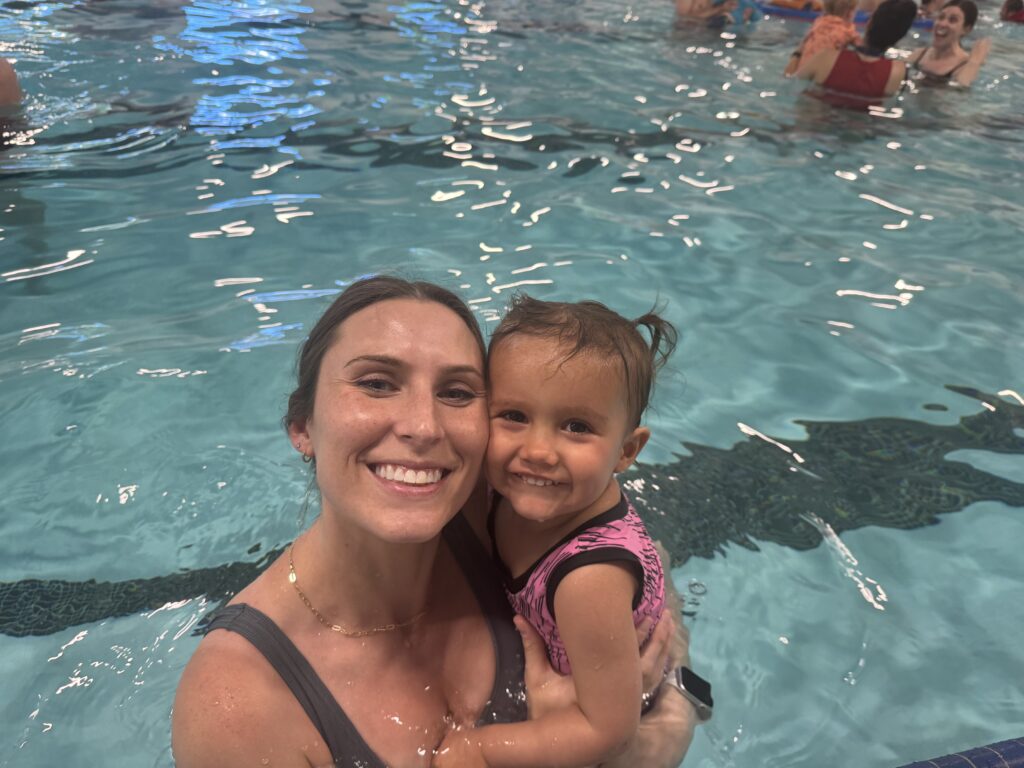
    Goggle marks on my eyes and soaking wet hair. Just feeling proud of myself for doing it!
  • Why I’m Cutting Back on Added Sugar During Pregnancy (And How I’m Doing it Realistically)

    Why I’m Cutting Back on Added Sugar During Pregnancy (And How I’m Doing it Realistically)

    For those of us who live in Ontario, it may come as a bit of a surprise considering the weather is still absolutely awful, but the 20th of March marked the first official day of Spring!

    Some days still feel a little wintery, but the birds are starting to chirp, the day is longer, and I’m starting to think about what I’m planting in my garden. Warmer weather here we come!

    To me, spring always feels like New Years Resolutions season 2.0. It’s a chance to reflect on your January goals and pare down what’s working, what’s not, and what needs adjusting. Maybe the whole 5 days a week in the gym has been too much of a slog, and you need to pivot to something different. Running outside perhaps? Or maybe you chickened out of signing up for that art class you said you’d do? Try again! Make spring your 2026 refinement season.

    This spring, I’m making one big adjustment: I’m cutting back on added sugar.

    Why I’m Cutting Back on Added Sugar

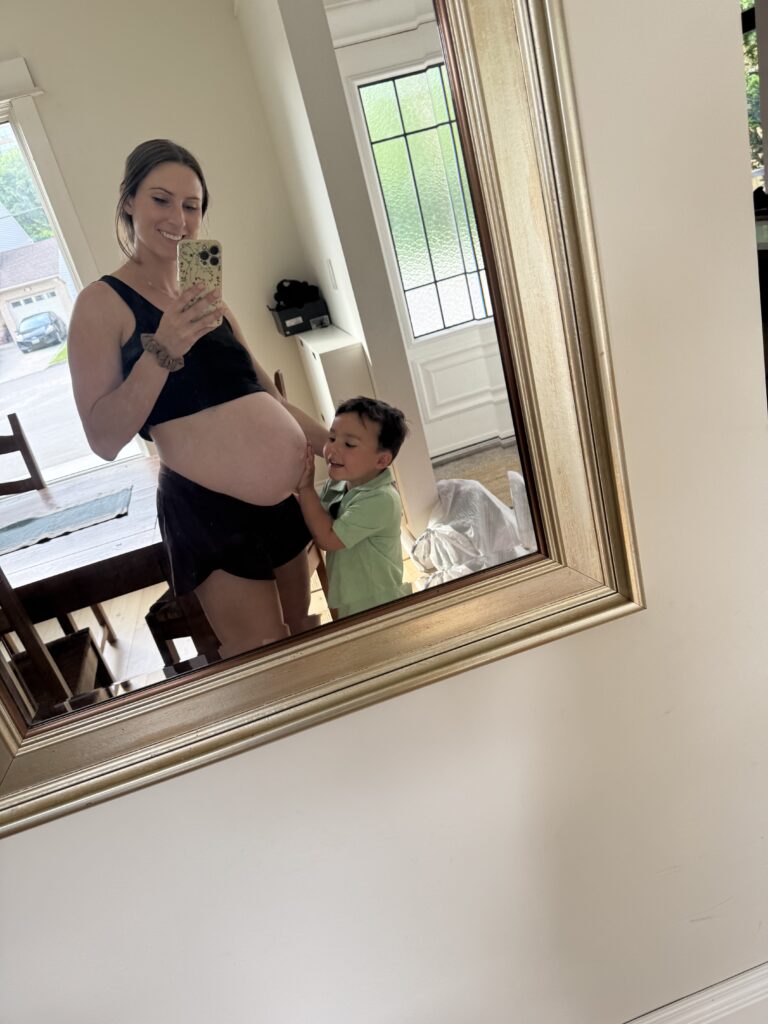
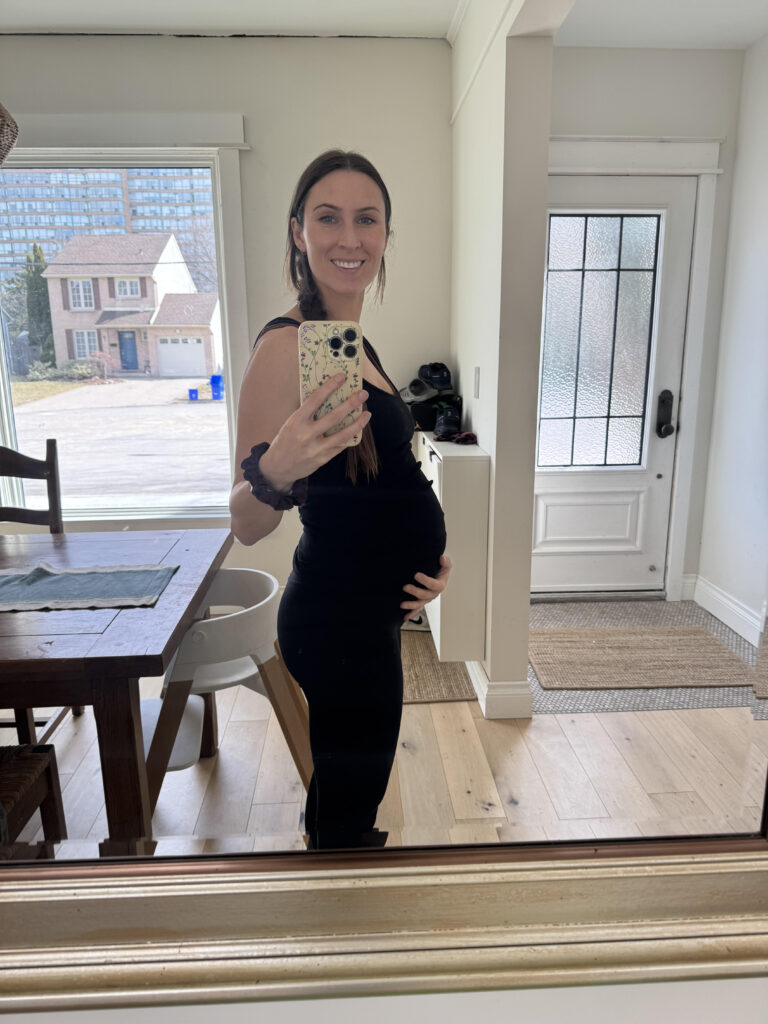
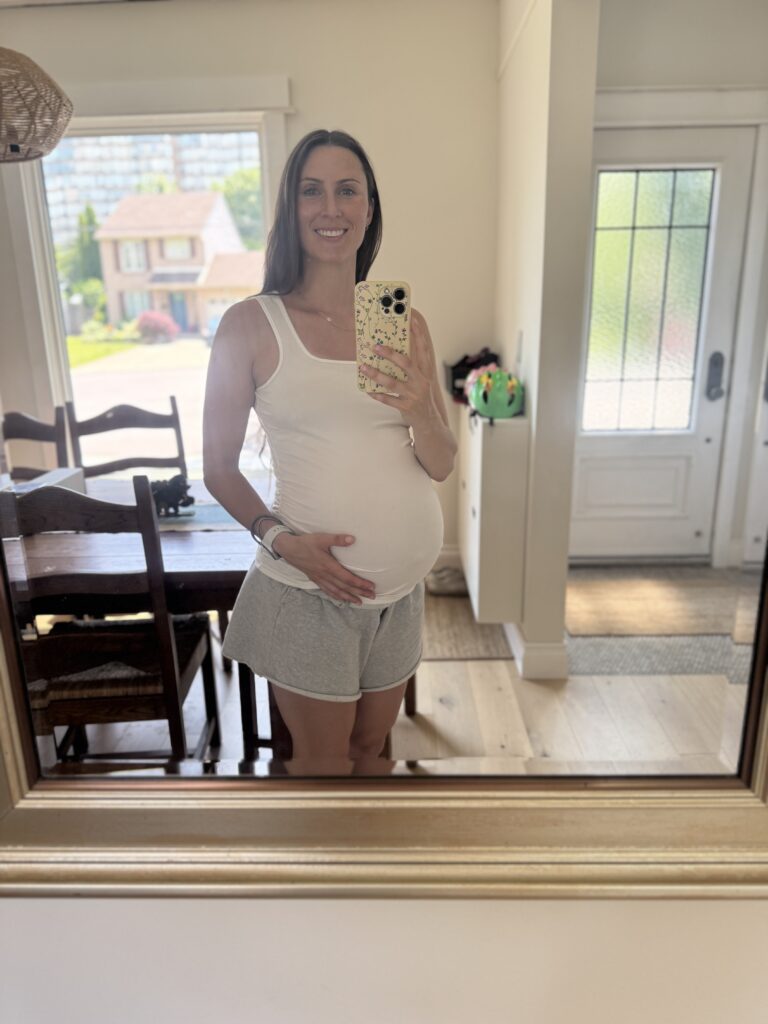
    Please ignore my dirty mirror. It’s much harder to find the time to take cute bump photos this time around!

    For those who haven’t read my previous post, I’m currently pregnant with my third baby.

    In my past two pregnancies, I was diagnosed with Intrahepatic Cholestasis of Pregnancy, a liver condition that can become dangerous for your baby if not managed carefully.

    During my second pregnancy, things escalated quickly at 37 weeks, leading to a scheduled immediate c-section. It was a stressful and overwhelming experience. And something I’m really hoping to avoid this time around.

    So now, I’m focusing on supporting my body as much as possible. Given that I want to give my liver the best chance it can have to support my pregnancy. Reducing added sugar is one of the ways I’m doing that.

    Of course, this is just my personal approach. Always check with your healthcare provider before making dietary changes during pregnancy.

    What is Added Sugar?

    Added sugar refers to sugars that are added to foods during processing or preparation, rather than naturally occurring.

    Common sources include:

    • Cane sugar
    • Corn syrup / high-fructose corn syrup
    • Honey
    • Agave
    • Syrups and sweeteners in packaged foods

    You’ll often find added sugars in:

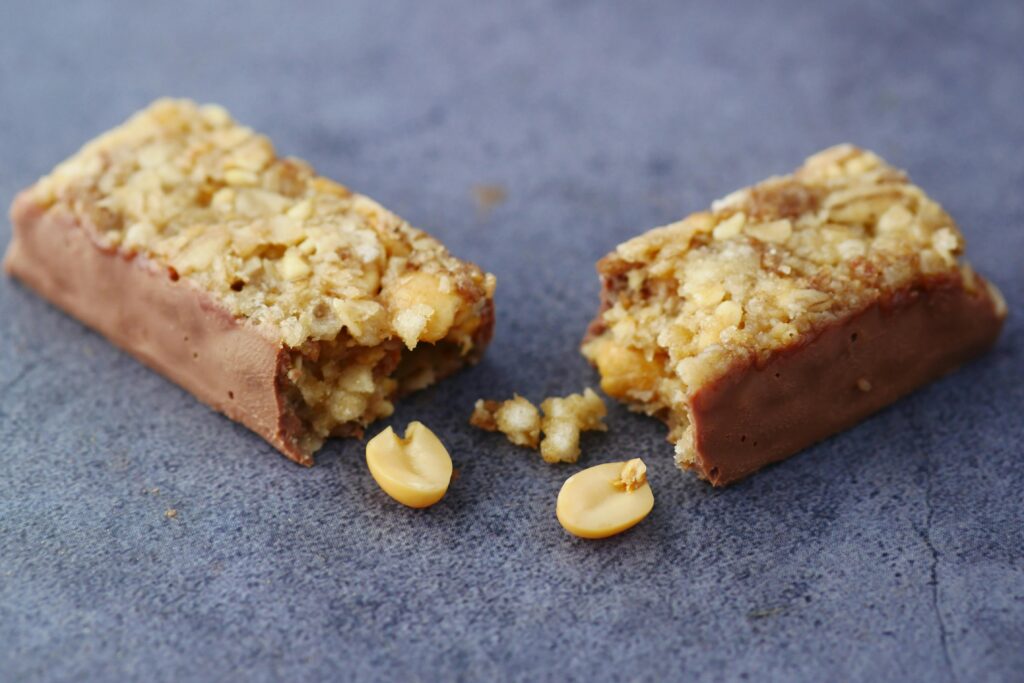
    • Granola bars
    • Flavoured yogurt
    • Cereals
    • Baked goods
    • Sauces and dressings

    Research has linked high intake of added sugars to things like tooth decay, energy crashes, and increased risk of conditions like Type 2 Diabetes and heart disease.

    Natural Sugar vs. Added Sugar

    I’m not eliminating sugar entirely.

    Foods like fruit and milk contain natural sugars, and they also come with nutrients like fibre, protein, and vitamins.

    Instead, I’m being more mindful of my overall sugar intake—especially from processed foods.

    My 10 Tips on How to Reduce Added Sugar

    1. Have a strong “why“: Behaviour change is hard. Having a meaningful reason makes it easier to stay consistent.
    2. Plan ahead: Keep lower-sugar snacks on hand so you’re not caught off guard.
    3. Understand your triggers: For me, it’s after meals, especially lunch. I now plan alternatives like fruit, a walk, or a distraction.
    4. Expect hard days: Some days will feel easy, others won’t. That’s normal.
    5. Build a support system: Having someone to talk to makes a huge difference.
    6. Out of sight, out of mind: If it’s not visible, you’re less likely to reach for it.
    7. Read labels: Sugar hides in more foods than you’d expect.
    8. Be flexible: No one likes to say no to birthday cake on their friend’s birthday. Enjoy special occasions without guilt.
    9. Pay attention to how you feel: I notice I feel more sluggish after eating a lot of added sugar. That in itself is motivating.
    10. Keep it positive: Think of this as a challenge, not a restriction.

    My Current Go-To Snacks to Reduce Added Sugar:

    Here are some of my current favourites:

    Unsweetened Applesauce

    Eggs (a complete protein with all 9 essential amino-acids)

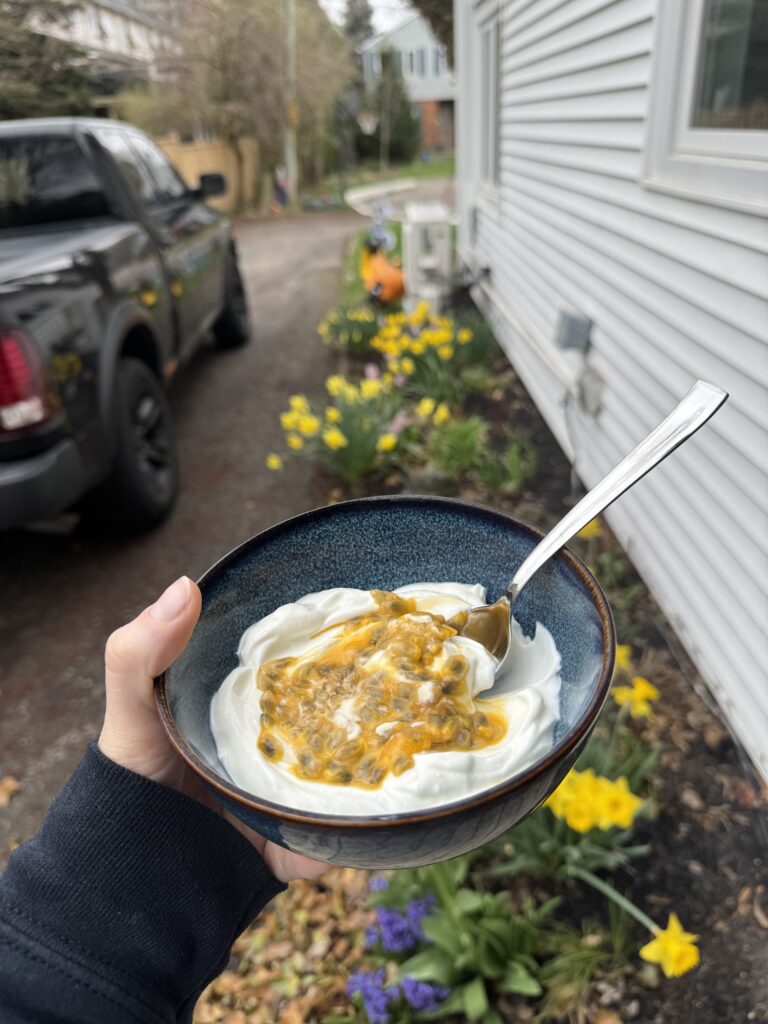
    Greek Yogurt or Cottage Cheese with a small amount of maple syrup and peanut butter

    Fruit (especially oranges, pineapple, and frozen berries with milk)

    Cheese for protein and satiety

    Electrolytes for hydration and subtle sweetness

    Pickles or savoury snacks to curb sweet cravings

    What I’ve Learned So Far

    This has been eye-opening.

    Before this, I would have said I eat very healthy—but I didn’t realize how much added sugar was sneaking into my day through snacks and small “pick-me-ups.”

    Now, I’m focusing more on:

    • Protein-rich foods
    • Balanced meals
    • Being intentional about what I eat

    Final Thoughts: Try a “Reduced Sugar Spring”

    Reducing added sugar isn’t about perfection—it’s about awareness.

    It’s about noticing how your body feels, making small adjustments, and building habits that actually work for your life.

    So if you’re looking for a reset, consider this your invitation:

    👉 Try a Reduced Sugar Spring

    Start small, stay flexible, and see how you feel.

  • I Didn’t Expect This During My Third Pregnancy: Anxiety

    I Didn’t Expect This During My Third Pregnancy: Anxiety

    Is Anxiety During Pregnancy Normal?

    Anxiety during pregnancy is actually very common. Many expectant mothers experience moments of worry, racing thoughts, or feeling overwhelmed — especially if they’ve had complications in previous pregnancies. The challenge can be knowing when these feelings are normal pregnancy worries and when they might be signs of prenatal anxiety.

    I’m pregnant with my third baby! Since this is my third “rodeo”, a lot of things have felt very familiar, but what I didn’t expect this time around was the anxiety that came with it.

    We’re over the moon excited to be expanding our family and I daydream daily about the full table I’ll have filled with love. However, I’ve been struggling with moments of feeling overwhelmed and just a general sense of unease that’s making it hard to lean into the bittersweet moments of what will be my last pregnancy.

    My Experience with Pregnancy Anxiety:

    For me, I’ve had intrahepatic cholestasis of pregnancy for my first two pregnancies (let me know if you’d like me to write a post about my experiences with it!). Because I’ve had it before, I know I’ll likely get it again. That makes it hard not to be hypersensitive to every little itch on my hands and feet. One small twinge can send me into a thought spiral of “this is it, I have it again” and my brain refuses to listen to reason. I.e. like it’s pretty early to be getting it, your skin is just dry, the itching went away etc.. etc.. Also, I will be having a C-Section and the idea of another surgery and recovery is something that does scare me.

    And oh man, the number of “what if…?” questions that pop into my head have been really tough. There are so many horror stories online and there truly is a balance to staying informed versus being overburdened with the worst-case scenarios.

    Some days are really good, especially when the February sun is out and the birds are chirping. Other days, I’m a tightly wound ball of nerves that could have a little “menty-b” (mental breakdown) if a sad song comes on my playlist. Some country songs honestly need to be outlawed on public radio.

    In the evenings, after a long day of working full-time and running after my two littles, I also feel like the only thing my brain can focus on is worry. It’s like it says, “hey girlie, which worry from your suuuuuper long list do you want to tackle tonight? If you’re feeling up to it, we can cycle through 2! or even 3!”

    So, I’ve been asking myself, “is this normal?” And I looked into it.

    The short answer is: yes, it is.

    The long answer is: if it’s affecting you daily, there are solutions, and you’re not alone.

    So, if you’re experiencing something similar, please breathe a sigh of relief and take a relaxing nap or a bath, because everything will be ok.


    Normal Pregnancy Worry vs Prenatal Anxiety:

    Anxiety can be a big scary word that gets tossed around easily and it is a normal part of life even outside of being pregnant. But anxiety does exist on a spectrum with fluctuations being common. Pregnancy in particular, with all its hormonal shifts, sleep problems, birth anticipation, and work/life/family changes, can all contribute to feelings of anxiety and lack of control.

    However, normal pregnancy worry is often something that is transient. Meaning that it comes and goes. Today can be better than yesterday or even your afternoon can be better than your morning. Normal worry is often tied to specific triggers, like watching a particularly traumatic news segment or hearing your neighbor talk about their birth story. Further, this worry does get worse when you’re tired or stressed and you just don’t have the mental strength to overcome it or think clearly.

    Overall, normal pregnancy worry is just a small part of your day or week, it doesn’t feel like it’s consuming you or taking over your life. If you’re struggling with leaving your home, interacting with others, or ruminating for days, then it’s possible that you might have “prenatal anxiety”.

    Prenatal anxiety is persistent worry that consumes most days of your week. Often, it can result in trouble sleeping due to worry. I know sleep can be elusive during pregnancy, but this is a sleep disturbance beyond the common aches and pains of pregnancy. It is feeling constantly on edge or keyed up. Generally, with prenatal anxiety, moms-to-be report extreme difficulty in enjoying their pregnancy.


    How to Cope with Pregnancy Anxiety:

    So, if pregnancy anxiety is normal—but still overwhelming—what can you actually do about it? You can:

    1. Name the feeling: simply acknowledging that you’re feeling anxious can help you work towards feeling better.
    2. Keep a journal or diary and write down the thoughts that are causing you worry. Sometimes putting them down on paper minimizes the impact that they have.
    3. Reduce your triggers. If a certain social media account just gets you spiraling every time, no matter how good-intentioned it is, maybe it’s time to mute them or take a social media break. Honestly, we could all do this.
    4. Create a routine that you follow when you feel anxious or create a list of things that you know make you feel good. This could be calling a friend/family member, listening to music, getting some movement in, or just walking outside and breathing fresh air. Find what works specifically for you.
    5. Give yourself permission to rest. This one is hard, especially if you have other young children that you’re responsible for. But maybe, you just request an evening to yourself if you’re able to do so. Perhaps your husband does bath time, or maybe your mother-in-law bakes cookies with them? Find an hour to yourself if you can and use that time to rest and recharge.
    6. Take something off your plate. Are you feeling extra overwhelmed because trying to cook dinner with your kids screaming and crying after school is just too much? Can you sign up for a meal service? Or try meal prepping on the weekend when you have more flexibility. Let go of perfection and maybe also lean into chicken nuggets and frozen peas for a little while. Similarly, maybe the laundry just doesn’t get folded. Your family will still be able to get dressed if their clothes are in a pile. Better yet, off-load your chores to someone else. You’re growing a baby for goodness sakes!
    7. Create a happiness list. I have photos of my kids, happy TV shows, rom-com audio books and feel-good music on my rotation that I cycle through when I want a boost of dopamine. It’s also a great way to remind yourself that good things exist outside of your racing thoughts.
    8. Lean into what you can control. I believe pregnancy is particularly stressful for me because I don’t have constant feedback on how everything is going in my belly. For my situation, what I can control is my diet, exercise, and mindset. I can avoid sugar (which I’ve read can exacerbate cholestasis), and I can say positive things to myself.

    When to Talk to a Doctor:

    If you’re finding that more often than not, you’re feeling like your anxiety is taking over and the strategies above just are not working for you, it might be time to reach out to someone who can help. It’s important to know that this is something that you should not have to struggle through, there is help available and while reaching out might be the hardest step, it does not mean there is anything wrong with you or that you are less than.

    Primary care providers (or your OB/GYN) are here to support you and can provide referrals to mental health services, therapists, and in certain cases can suggest medications or treatments that will make a huge difference.

    Please reach out if you or your family is noticing that:

    • Your anxiety is increasing and does not seem to be ebbing and flowing
    • Your sleep is consistently disrupted, broken, or just “not enough”
    • You are feeling like you’re unable to cope with daily tasks, you’re ruminating for days, and things that once brought you joy no longer do.

    Asking for help does not mean you’re weak or broken. It actually means you are strong and you care about yourself, your family, and your baby. No one should have to experience this, especially not alone, and there are solutions.


    Pregnancy Is Hard and You’re Not Alone:

    Growing a baby is tough stuff. And while a lot of it is viewed with rose coloured glasses, there are some aspects of pregnancy that are nerve-racking, scary, and confusing.

    Know that fluctuations in your mood are normal and that you’re not the only pregnant person who feels this way. But also know, that if you feel something is off and you’re really struggling or lacking support, there are people who want to help you.

    Pregnancy can be beautiful, but it can also be overwhelming and uncertain.

    If you’re feeling anxious, worried, or just not like yourself right now, please know that you’re not alone. Many moms experience this—even during pregnancies they deeply wanted and planned.

    Give yourself grace. You’re doing something incredible.

    Sources:

    • American College of Obstetricians and Gynecologists
    • March of Dimes – Mental health during pregnancy
    • Postpartum Support International – Perinatal anxiety information
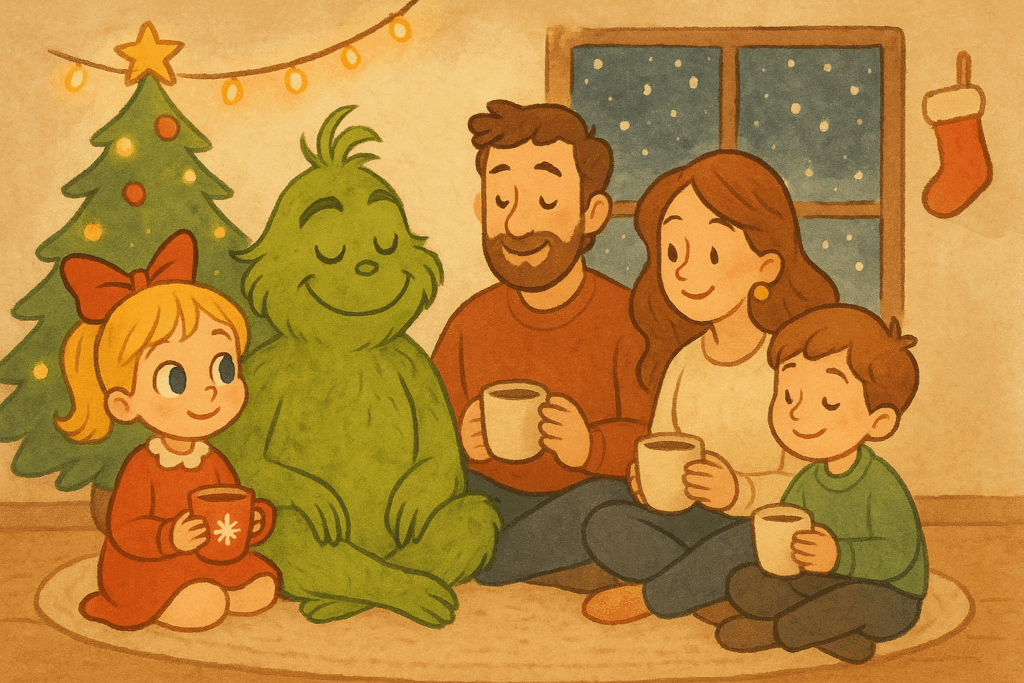
  • In Defense of the Lazy Mom (Especially at Christmas)

    In Defense of the Lazy Mom (Especially at Christmas)

    Fa la la la laaaaa

    Every year around this time, my social media feed fills up with images of moms who seem to have mastered Christmas. Perfectly coordinated pajamas. Homemade hot chocolate bombs. Gingerbread houses that look like they were designed by professional architects. Elves on shelves living their best (and most mischievous) lives. And I love the idea of it all. Everything looks and seems perfect.

    But then I play the comparison game, and I realize I don’t even have an elf on the shelf. My Christmas gifts will most all likely be bought in the three days before Christmas. And the baking I do will be a Pinterest versus reality type situation.

    I’ve noticed that I start to feel the little mom-guilt itch kick in, and I keep thinking I should be doing more. As mom, aren’t I the one responsible for creating the loving childhood memories my kids will look back on fondly? What if everything I’m trying hard to do just doesn’t cut it?

    But I’ve decided that needs to change. I’m embracing my inner “lazy mom” — and I think she might be the best version of me yet.


    What Being a “Lazy Mom” Really Means

    Let’s be clear: when I say lazy, I don’t mean careless or useless. I mean calm. Intentional. Grounded.

    Being a “lazy mom” doesn’t mean you love your kids any less. It means you’ve decided to stop running yourself into the ground trying to prove how much you love them. It’s choosing presence over perfection, connection over chaos, and laughter over lists.

    Because honestly? Our kids don’t care about themed wrapping paper or hand-painted ornaments. They care about us — the tone of our voice, the way we smile when they show us something, the moments when we’re really there.


    The Pressure to Be the “Perfect Mom”

    Somehow, motherhood — especially during the holidays — has become a performance (and in some circles, a competition).

    We’re expected to create traditions that are magical, meals that are 5 courses, and memories that dazzle on camera. There’s this unspoken rule that a “good mom” goes above and beyond at Christmas. And does it all with perfect makeup, a bouncy blow-out, and the cutest clothes.

    Who are we trying to impress? My 3-year-old wears his pants backward and takes his shirt off the first chance he gets.

    I know behind every perfect Instagram photo or TikTok reel is a mom who probably hasn’t sat down all day. Who’s exhausted. Who’s trying so hard to make it special that she’s missing it while it’s happening. Who probably feels like she’s not being appreciated for all the work she’s putting in.

    And if we’re being honest — none of that pressure is what Christmas is about.

    “Why is this so important? Christmas is about more than just ribbons and bows.”

    Cindy Lou Who

    The Magic of Letting Go

    When I vocalized the permission to do less and be lazy, everything changed. A weight (one Santa’s bag of presents worth) I didn’t know I was carrying disappeared.

    This year, instead of baking four kinds of cookies, all iced with intricate designs. We’re making one batch — maybe it will be the pre-cut kind from the grocery store or maybe it will be homemade. We’ll see how we feel. My kids can overload, *cough*, I mean decorate them with so much icing they become inedible and I won’t be able to give them to anyone outside our family, but we will have the best time. This is what I want to remember: not everyone swooning over the pretty cookies, but the little giggles we had making them.

    Maybe we won’t wear the adorable matching Christmas pajamas, and everyone can wear what they want. For my son, that means clothing optional and my daughter will probably wear something with a unicorn or a cat. It will still be a cozy, messy, joy-filled Christmas morning that feels more us than anything.

    And here’s the thing I’m realizing when you stop chasing perfection or the approval of other, you make space for connection with those who matter the most.


    Your Kids Don’t Need the “Most” — They Need You

    Our kids aren’t keeping score or setting expectations. They won’t remember whether the wrapping paper and bow matched or if the tree was decorated just so. They’ll remember the feeling of the holidays. The warmth of being together, the laughter echoing through the house, the peace of a mom who wasn’t rushing, huffing, or worrying.

    So maybe being a “lazy mom” isn’t lazy at all. Maybe it’s brave. Maybe it’s choosing to step off the hamster wheel of comparison and say, “what I’m doing is enough. I am enough.”

    “Maybe Christmas doesn’t come from a store. I think maybe Christmas means a little bit more.”

    Cindy Lou Who

    This Christmas, Let’s Redefine “Lazy”

    Let’s choose rest and relaxation. Let’s choose joy. Let’s choose messy bun imperfection.

    Let’s buy the desserts, skip the matching outfits, and say yes to the perfectly imperfect real-life moments that make this season meaningful.

    Because at the end of the day, our kids won’t remember how picture-perfect it looked — they’ll remember how they felt.

    And if it felt calm, cozy, and full of love — that’s the kind of Christmas worth celebrating.


    Maybe being a lazy mom isn’t lazy at all — maybe it’s just a mom who finally knows what matters most.

  • Goal Setting for the Winter When Your Motivation is in Hibernation

    Goal Setting for the Winter When Your Motivation is in Hibernation

    The days are getting shorter, the weather is getting snowier, and honestly? All I want to do is curl with a blanket and become one with my couch.

    Winter, especially in Ontario, can be downright dreary. It’s hard to get excited about your week when the sun starts setting at 5pm. You wake up in the dark, spend your evening in the dark, and it feels like your only goal is simply surviving until spring.

    If you’re feeling like you’re coasting through the dark months of November, December, January, and February, you’re not alone. Goal setting in Spring and Summer feels effortless: people are out, events are happening, and being active outside takes zero planning. Your goals align naturally.

    Winter? Whole different vibe.

    The brightness of summer feels too far away to motivate anything long-term, and that’s totally fine and totally normal. You’re not missing out. You’re not falling behind. You’re not unmotivated. You’re in a different season, literally and emotionally.

    Here’s the truth: you can still set meaningful winter goals without having a full vision.

    Reframe Your Winter Goals: Think Smaller, Softer, and Seasonal

    Winter goals don’t need to be ambitious or life changing. They can be tiny sparks of joy woven throughout your day or “maintenance mode” habits you’re already doing well.

    And yes, obviously, many goals in winter must adapt to the weather. Training for a marathon? Amazing. Just layer up, invest in reflective gear, and expect the occasional snow day. Feeling festive? Make a goal to keep the holiday spirit alive in small ways. Want a seasonal goal that’s purely fun? Commit to a Hallmark movie every weekend for peak cozy vibes.

    This winter season can be about:

    Clarifying, not just conquering.

    Use this time to reflect on what you want, not necessarily chasing it straightaway.

    Resetting, not reinventing.

    Winter is the year’s build-in rest. Audit your pantry, refresh your wardrobe, or learn a small skill like keeping a sourdough starter alive.

    Resting, not rushing.

    Lean into the cozy. Think blankets, coffee, quiet nights, candles, and the simple gratitude of being inside while snow falls.

    Let’s rebrand winter as a natural season for gentler, softer goal setting. Release the pressure. You’re already doing better than you think.

    Continue reading below, if you’d like some actionable tips for goal setting in the winter.


    Tip 1: Start With How You Want to Feel

    When you don’t know what your goals are yet, begin with emotions instead of outcomes.

    For example:

    • “I want to feel grounded.”
    • “I want to feel calm.”
    • “I want to feel connected.”
    • “I want to feel like I’m taking small steps forward.”

    Then, turn those feelings into micro-goals.

    • Calm → 5 minutes of breathing or stretching daily
    • Connection → Text or meet one friend per week
    • Grounded → Morning journaling or evening gratitude check-ins

    Tip 2: Choose “Low-Lift” or “Micro” Goals Over Big Resolutions

    Low-lift goals require minimal effort but have a noticeable payoff.

    Examples of a low-lift goal could be:

    • Declutter one drawer or shelf per week.
    • Add one extra glass of water to your day.
    • Take a 10-minute morning walk.
    • Replace doom scrolling with reading.
    • Light a candle and stretch at night.
    • Reduce added sugar in one small way.

    Micro-goals stack up. No big overhaul needed – just tiny degrees of improvement.


    Tip 3: Create a Winter Bucket List (Even a Tiny One)

    Seasonal goals are perfect when long-term goals feel foggy. Lean into the cozy magic of winter.

    Some Ideas:

    • Try one new cozy recipe weekly.
    • Have a winter movie night (there are so many fun Christmas movies).
    • Walk outside during a snowfall. Romantic and magical.
    • Visit a local café and treat yourself to a holiday latte.
    • Do a winter craft with your kids like making an ornament.
    • Build a snowman. And why not throw in a snow angel or an impromptu snowball fight while you’re at it!

    The key to this bucket list: it needs to feel fun, doable, seasonal, and the exact opposite of a chore list. Looking for inspiration? Check out my kid-friendly Christmas bucket list:


    Tip 4: Focus on “Maintenance Mode” Goals

    Sometimes the easiest thing to do, is to just keep doing what you’re doing. If you’ve built up a habit over the summer that you’re proud of, mark that down and make a point to keep going.

    Here are some suggested goals that aim to maintain the stability you may have already built the foundation for:

    • Keep up basic routines. Like journaling, getting your steps in, and meditation.
    • Protect your sleep. Dark months can hit your mood hard, help to prevent Seasonal Affective Disorder by getting your sleep.
    • Keep the house just organized enough. Think acceptable baseline, not perfection.
    • Support your mental health. Think going outside during the day, talking to friends, and taking vitamins.
    • Get some gentle movement in. Evening yoga or some mobility work is great during the winter. Check out YouTube for classes. Check out this mobility class from Nourish Move Love that I turn to regularly.

    These maintenance goals allow you to enter spring with energy instead of burnout.


    Tip 5: Use a Weekly Reset to Reassess What You Actually Want

    Pick a day (Sunday works well!) and check-in:

    • What worked?
    • What felt tough?
    • What lifted my mood?
    • What’s one thing I want to try next week?

    Winter is a season of reflection, so let goal setting be a conversation with yourself.


    Tip 6: Adopt the “Winter Try List” Instead of Goals

    A “try list” = no pressure to do the thing.

    What is a “try list”? It’s like a bucket list, but it focuses on things you’d maybe like to explore before fully committing to.

    Examples could be:

    • Try a new bedtime routine, like reading before bed instead of TV.
    • Try a new workout class. Finally sign up for that reformer Pilates class you’ve been eyeing.
    • Try meal-prepping 1–2 meals. Give it a try with a couple recipes rather than committing your whole week.
    • Try going to bed earlier.
    • Try going alcohol free.
    • Try marathon-style training without actually signing up.

    If it doesn’t stick? No guilt. Move on.


    Tip 7: Celebrate Micro-Accomplishments

    Winter is long, motivation is low, and every tiny win counts.

    • Went for a walk? Win.
    • Cleaned part of your house? Win.
    • Played with your kids? Win.
    • Showered on a tough day? Huge win.

    Momentum builds from the smallest sparks.


    ‘Tis the Season

    Winter goals don’t need to be grand. You really don’t have to train for that Hyrox competition, lose weight, or reinvent yourself. My own goals this season are simple: hit 8,000-10,000 steps a day, reduce my caffeine intake, and stay “unplugged” and off my phone when I’m with my kids.

    Come Spring, you’ll likely feel more clarity and motivation for something new. Until then? Grab your blanket, make a cozy Pinterest board, and just be.

    In the depth of winter, I finally learned that within me there lay an invincible summer.

    Albert Camus
  • 7 Ways I Stopped the Negative Self-Talk Spiral (And What I Want to Model for My Kids)

    7 Ways I Stopped the Negative Self-Talk Spiral (And What I Want to Model for My Kids)

    This post is going to be a little bit more vulnerable than usual.

    Recently, I messed up. I thought something was scheduled on a certain day, so I rearranged my entire work schedule around it. I made a big deal about needing time off and asked for an accommodation that ended up mildly inconveniencing others.

    Long story short: I thought my kids’ daycare had a day off when they didn’t. I still have no idea why I even thought that, and my husband and I have been joking that I must have dreamt it.

    Sounds pretty harmless, right? And it was. But what really stuck with me was what I said to myself after I found out I was wrong. I called myself stupid, a dummy, air-headed. I completely tore myself down.

    Try not to sweat the small stuff. Life is full of mistakes.

    Even writing this out now, I realize how ridiculous it sounds. It was such a small mistake. To quote Kourtney Kardashian, “Kim, there’s people that are dying.”

    What also bothered me was realizing how I was modeling that kind of self-talk to my kids. I’d be devasted if they spoke to themselves the way I just did.

    Once that clicked, I knew I needed to change something, and fast. I was on a one-way trip to “Ruminating-All-Night-Town”, so I had to stop the spiral.


    How I Turned My Night Around

    1. Wallow… then move on

    If you need to, let yourself wallow. Sit in your self-pity for 5-10 minutes. It’s like eating too much Halloween Candy. You have a bunch after trick r’ treating and you get it out of your system. Set a timer, feel the feelings, then move on.

    2. Stop the negative self-talk

    Catch yourself in the act. Would you say that to your best friend? No? Then don’t say it to yourself. Words have power.

    3. Talk to someone

    I always call my mom. She knows how to provide comfort and perspective. In this case, she laughed, which honestly, I needed. It helped me take myself a little less seriously. If you don’t feel like talking, try journaling.

    4. Give yourself grace

    You’re human. I have two young kids (I know, I mention it a lot), and I’m running on a pretty constant sleep deficit. Mistakes are going to happen. I will make more mistakes. My husband will make mistakes. Your coworker, your neighbour, your barista, your best friend etc… will make mistakes. Own them, learn from them, and try again.

    5. Go for a walk

    This one helped the most. Moving my body helped me process everything and literally walk away from the negativity. It gave my nervous energy a purpose and cleared my head.

    6. Ask yourself: will this matter in a year?

    In a week? In a day? Probably not. I realized that in 48 hours no one will care. Of course, it’ll be a funny story later… but no one will “care”.

    7. Reframe your mindset

    Is there a small silver lining? For me, I still took the day off, and clearly, I needed it. I got a bonus day to rest, catch up, and reset. I felt so much better afterward.


    I can be a person who has anxiety, but I don’t anxiety to have me. I want my kids to see that it’s okay to mess up. It’s how you recover that really matters.

    These small mindset shifts can really make a big difference when you’re dealing with disappointment or a wave of self-criticism.

    Have you ever spiraled over a small mistake? What helps you get back on track?