Tag: prenatal

  • Prenatal Lap Swimming for Beginners: Why I’m Obsessed in my Third Trimester (+ A Simple Swim Workout to Try)

    Prenatal Lap Swimming for Beginners: Why I’m Obsessed in my Third Trimester (+ A Simple Swim Workout to Try)

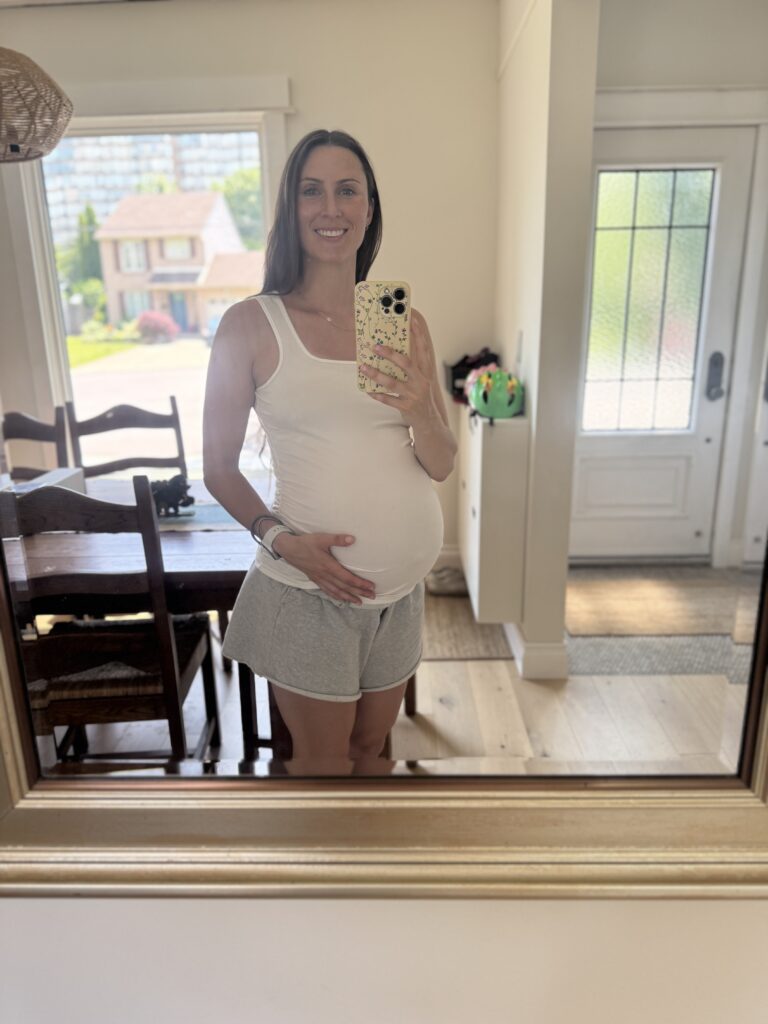
    I don’t know about you, but it feels like spring is just zooming by! At almost 30 weeks pregnant, it’s really hitting me how quickly times flies. Before I know it, baby will be making their grand appearance.

    About a month ago, in a very impulsive fashion, I showed up to my local pool at 26 weeks pregnant with cheap goggles from Amazon, a swimsuit that was doing its absolute best, and approximately zero idea what I was doing.

    And it was one of the best decisions I’ve made this entire pregnancy.

    I dabbled in swimming laps back in university (about ten years and now three kids ago) and I grew up on a lake, but I wouldn’t exactly call myself a seasoned lap swimmer. Lately though, with my belly growing, my back aching, and just wanting to feel athletic again, I kept seeing swimming come up as one of the best exercises you can do during pregnancy.

    Swimming in pregnancy is a low impact, full body cardio workout. It’s gentle on your joints (mine are definitely starting to feel the extra weight) and it’s supportive for your bump.

    So, I requested a toddler-free hour, booked a pool session, packed a bag, and just… went.

    Here’s what happened, why I’m already planning my next session, a simple beginner prenatal swim workout you can try, and hopefully, most importantly, the push to get you in the pool too! Even if you’ve never swum laps before.


    My First Lap Swim While Pregnant

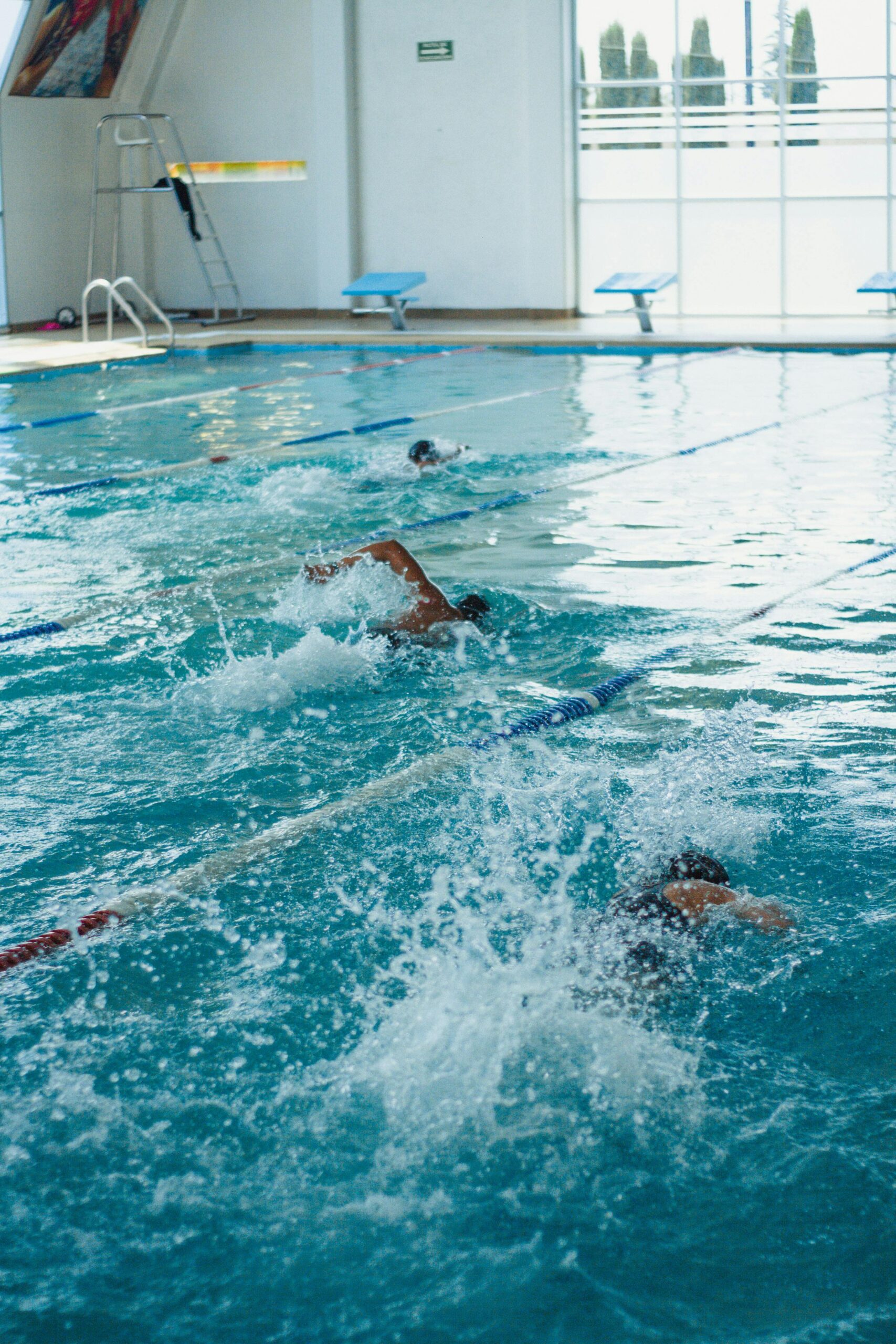
    Honestly, I had zero expectations going in. I gave myself the goal of just swimming slowly in the pool, back and forth. If I wanted to leave after 5 minutes, I could.

    Instead, I stayed for 40 minutes! And I really loved every second of it.

    I was definitely a fish out of water (pun intended), and it took me a few laps before a front crawl started to feel even remotely natural. Coordinating breathing, arms, and legs took some getting used to.

    But the beauty of lap swimming is that you can switch strokes anytime and rest at the end of each lap. There is always a built-in reset.

    And yes, it’s a tougher workout than it looks. My arms, legs, and glutes were feeling it the next day. But in a good way! The kind that reminds you your body is strong.

    For the first time since before this pregnancy, I actually felt a bit like me again.

    To say I was hooked would be an understatement.


    Why Swimming in Pregnancy is so Beneficial

    I have a Master’s degree in Health Sciences and over a decade of experience in clinical research, so I can’t help but look at the evidence when I try something new. I also have so little time, that I want to know what I’m doing is going to be the best use of it.

    And the research on swimming during pregnancy is genuinely compelling.

    Here’s what stands out to me:

    • It’s low impact but high reward. Water supports your body weight, giving your joints a break while still providing an effective cardiovascular and strength workout.
    • It can reduce swelling. The gentle pressure of the water can improve circulation and reduce puffiness—especially in your legs and feet. I always feel noticeably lighter afterward.
    • It supports your back. The buoyancy takes pressure off your spine, which is a huge relief when you’re carrying extra weight up front. This is what initially caught my attention and drew me to swimming in the first place.
    • It’s safe throughout pregnancy. For most low-risk pregnancies, swimming is considered one of the safest forms of exercise from the first trimester right through to the end. As always though — check with your healthcare provider before starting, especially if this is new for you. I had really wanted to do a workout where I wouldn’t have to scale down or second guess how safe the movement was for me.

    The Part Where I Was Intimidated (And You Might Be Too)

    Ok – walking into a lap pool as a beginner is intimidating. Everyone looks like they know what they’re doing. There are different lanes. There are people training for triathlons.

    It’s easy to get in your head and think that you don’t belong. But, I’m here to tell you that you do! You 100% do.

    Here’s what I want you to know:

    **NO ONE CARES**

    I mean that in the best possible, kindest way. Everyone in that pool is focused on their own workout. The slow lane exists for you and for me, and there is absolutely no shame in it. Now that I’m over 30, I find that I’m genuinely enjoying new experiences where I’m a complete beginner. The older we get, it seems like the less we’re placed in those scenarios. So, embrace being the beginner!

    The first lap will feel hard and probably pretty awkward. The second one will feel slightly less hard and awkward. By the fifth one, you’ll start to find a rhythm. And by the time you’re towelling off and heading to your car, you’ll already be thinking about when you can come back and do it all over again.

    I promise.

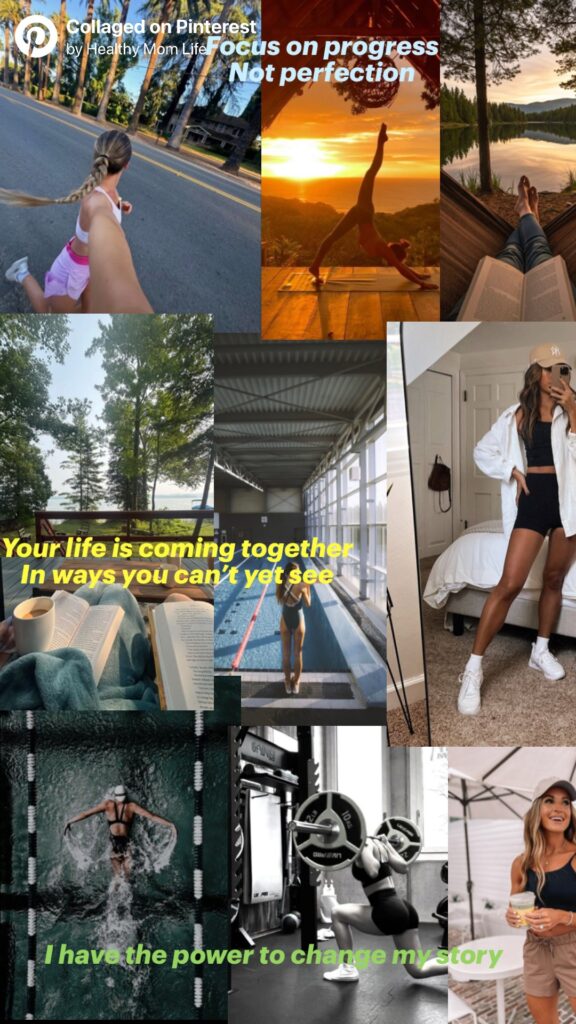
    My Summer Vision Board – it includes Lane Simming!

    What to Bring (The Beginner Checklist)

    Swimming is great because you really don’t need all that much. You might even have some of what you need already. Here are some suggestions if you want a place to start.

    Here’s what I bought from Amazon:

    1. Maternity Swimsuit: something comfy and cute that I could swim laps in. I bought this one, and I really like it.
    1. Goggles: These definitely make it easier to do a front crawl. Also, you’ll feel like a real swimmer. I bought these goggles and have been happy with them.
    2. Swim Cap: I have long hair, and I wanted to protect it from the chemicals in the pool as much as possible. Bonus, swim caps help prevent water from entering your ears. These are the caps I bought, and so far so good.
    3. Leave in Conditioner: Again, in an effort to protect my hair from getting dry, I coat the ends of my hair with leave in conditioner.

    Here’s what I grabbed from home:

    1. A gym bag to keep my change of clothes in and a towel
    2. A water bottle (obvious)
    3. My Apple watch to track laps and time

    That’s it. You really don’t need much.


    The Beginner Prenatal Lap Workout I’d Start With

    This is the loose structure of a workout that has started to become my “go-to” as I’ve now gone swimming consistently every weekend.

    I like how the swim stroke changes to keep things interesting. Adjust everything based on how you feel: some days the pool will feel easy, other days it won’t, and both are completely valid.

    As always: get your healthcare provider’s clearance before trying this.

    Warm-Up (5-10 minutes):

    Please do not skip warming up. I jumped into swimming laps one time, and I just felt so cramped and tired on my first lap.

    You can do some light stretching before you get into the pool: think arms, legs, and back. Then spend a few minutes in the water getting comfortable. If the pool has a shallow end, you can walk around a few times, loosen your hips, move your arms through the water. Just focus on getting some blood flow throughout your body.

    Then: 2 gentle lengths of your choice — I like doing a slow freestyle (froggy swims). Keep in mind that if you have pelvic pain, this might make it worse, so listen to your body. For me, I really focus on going as slow as I can and getting comfortable with breathing in the water.

    Main Set:

    I like to call this workout the 3×3. You start with a flutter board and focus on your kicking. You do a lap to the deep end and back. Take a break and then you do a front crawl. Again, you do a lap to the deep end of the pool and back. Take another break. Finally, you do a back stroke to the end of the pool and back. Break again. Repeat these 2 more times or until you’d like to end your pool session.

    Circuit:

    Flutter board length of pool and back

    (Rest)

    Front crawl length of pool and back

    (Rest)

    Back stroke length of pool and back

    (Rest)

    *Repeat for a total of 3 times or until you’re finished your workout*

    Cool Down:

    End your session with another 2 gentle lengths of your choice. Then I like to do some static stretching in the shallow end. I do arm stretches like shoulder and triceps stretching while I walk around. Then I end with some quad stretching and some dynamic hip openers.

    This pool session ends up being around 20 minutes depending on the amount of time you spend stretching, how many circuits you do, and how fast you are.


    Quick Tips and Take Away:

    1. There is usually a sign posted telling you the direction of swimming for the lanes. Don’t make my mistake and read the sign backwards. Accidently touching the toes of the person you’re sharing a lane with is very uncomfortable. Generally, follow the direction of whoever is already in your lane.
    2. Going slow is better. Go slow to build your proficiency and skills. Burning yourself out going superfast with improper form impresses no one.
    3. Rest as long as you need to. There’s no shame in hanging out at the end of the lanes. You can always let someone faster pass you.
    4. Remember that you won’t be a pro after the first session, but you will get better with practice. Everyone starts somewhere.
    5. When you leave the pool, please take your time. I find the buoyancy of the water can shift baby’s position and my back also needs to adjust to the weight of baby again. Going slow up the stairs helps with that adjustment.

    Will I go back?

    Yes! I’ve got my next session booked and I plan on going as long as I can into this pregnancy. These swim sessions have been so helpful for me to feel athletic, to feel like I’m doing something for me, and overall have been very meditative.

    I like that I’m showing my kids that mommy has something she does for fun outside of the house. I also like that they get to spend some time with their dad, which is something that will become even more routine for them once #3 gets here.

    If you’ve been on the fence about trying swimming during your pregnancy — or honestly at any point in your mom life — I really hope this nudges you off it. You don’t have to be fast. You don’t have to be graceful. You just have to show up.

    The slow lane will be there waiting for you. And so will I. 💙

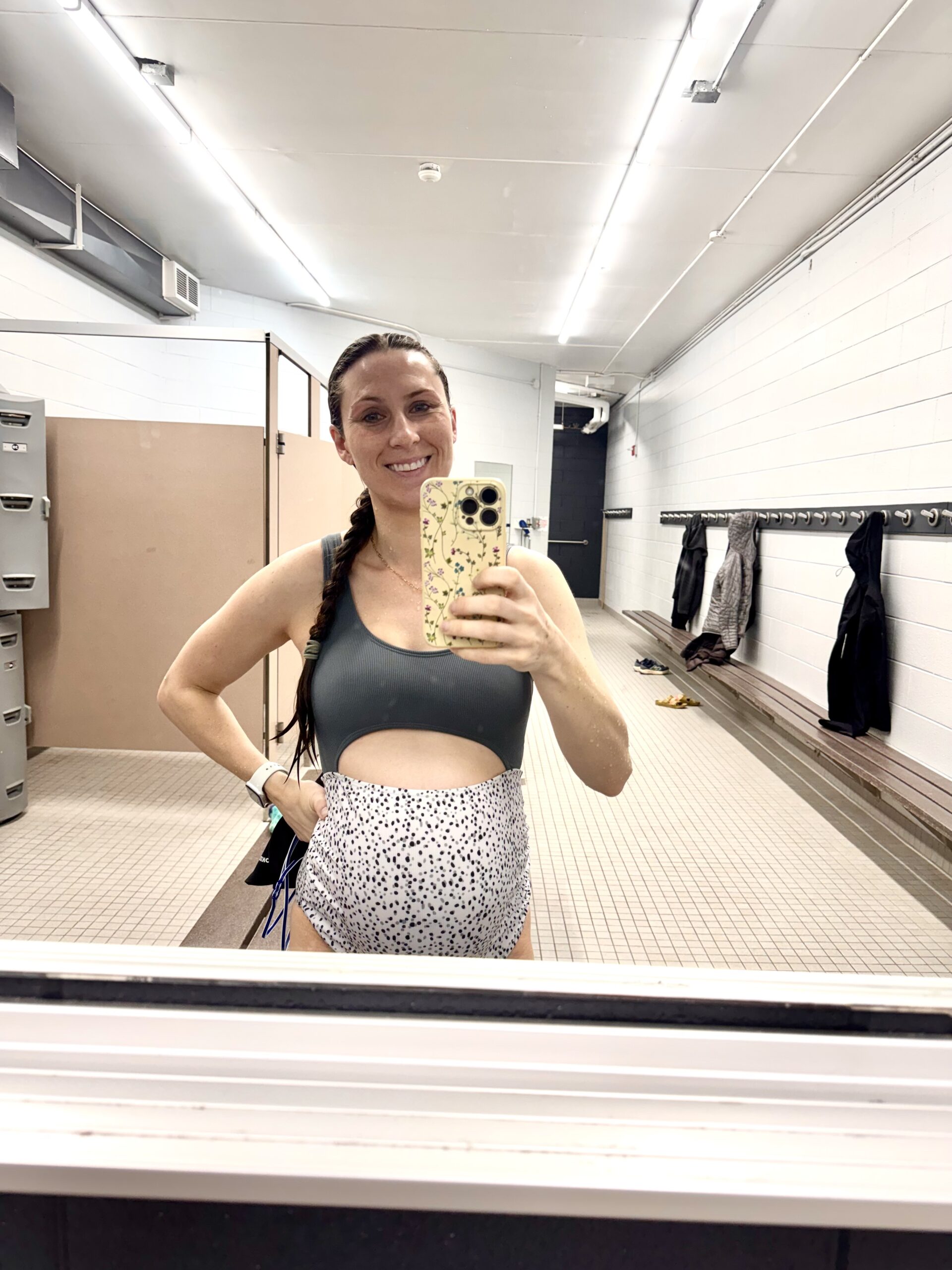
    Goggle marks on my eyes and soaking wet hair. Just feeling proud of myself for doing it!
  • I Didn’t Expect This During My Third Pregnancy: Anxiety

    I Didn’t Expect This During My Third Pregnancy: Anxiety

    Is Anxiety During Pregnancy Normal?

    Anxiety during pregnancy is actually very common. Many expectant mothers experience moments of worry, racing thoughts, or feeling overwhelmed — especially if they’ve had complications in previous pregnancies. The challenge can be knowing when these feelings are normal pregnancy worries and when they might be signs of prenatal anxiety.

    I’m pregnant with my third baby! Since this is my third “rodeo”, a lot of things have felt very familiar, but what I didn’t expect this time around was the anxiety that came with it.

    We’re over the moon excited to be expanding our family and I daydream daily about the full table I’ll have filled with love. However, I’ve been struggling with moments of feeling overwhelmed and just a general sense of unease that’s making it hard to lean into the bittersweet moments of what will be my last pregnancy.

    My Experience with Pregnancy Anxiety:

    For me, I’ve had intrahepatic cholestasis of pregnancy for my first two pregnancies (let me know if you’d like me to write a post about my experiences with it!). Because I’ve had it before, I know I’ll likely get it again. That makes it hard not to be hypersensitive to every little itch on my hands and feet. One small twinge can send me into a thought spiral of “this is it, I have it again” and my brain refuses to listen to reason. I.e. like it’s pretty early to be getting it, your skin is just dry, the itching went away etc.. etc.. Also, I will be having a C-Section and the idea of another surgery and recovery is something that does scare me.

    And oh man, the number of “what if…?” questions that pop into my head have been really tough. There are so many horror stories online and there truly is a balance to staying informed versus being overburdened with the worst-case scenarios.

    Some days are really good, especially when the February sun is out and the birds are chirping. Other days, I’m a tightly wound ball of nerves that could have a little “menty-b” (mental breakdown) if a sad song comes on my playlist. Some country songs honestly need to be outlawed on public radio.

    In the evenings, after a long day of working full-time and running after my two littles, I also feel like the only thing my brain can focus on is worry. It’s like it says, “hey girlie, which worry from your suuuuuper long list do you want to tackle tonight? If you’re feeling up to it, we can cycle through 2! or even 3!”

    So, I’ve been asking myself, “is this normal?” And I looked into it.

    The short answer is: yes, it is.

    The long answer is: if it’s affecting you daily, there are solutions, and you’re not alone.

    So, if you’re experiencing something similar, please breathe a sigh of relief and take a relaxing nap or a bath, because everything will be ok.


    Normal Pregnancy Worry vs Prenatal Anxiety:

    Anxiety can be a big scary word that gets tossed around easily and it is a normal part of life even outside of being pregnant. But anxiety does exist on a spectrum with fluctuations being common. Pregnancy in particular, with all its hormonal shifts, sleep problems, birth anticipation, and work/life/family changes, can all contribute to feelings of anxiety and lack of control.

    However, normal pregnancy worry is often something that is transient. Meaning that it comes and goes. Today can be better than yesterday or even your afternoon can be better than your morning. Normal worry is often tied to specific triggers, like watching a particularly traumatic news segment or hearing your neighbor talk about their birth story. Further, this worry does get worse when you’re tired or stressed and you just don’t have the mental strength to overcome it or think clearly.

    Overall, normal pregnancy worry is just a small part of your day or week, it doesn’t feel like it’s consuming you or taking over your life. If you’re struggling with leaving your home, interacting with others, or ruminating for days, then it’s possible that you might have “prenatal anxiety”.

    Prenatal anxiety is persistent worry that consumes most days of your week. Often, it can result in trouble sleeping due to worry. I know sleep can be elusive during pregnancy, but this is a sleep disturbance beyond the common aches and pains of pregnancy. It is feeling constantly on edge or keyed up. Generally, with prenatal anxiety, moms-to-be report extreme difficulty in enjoying their pregnancy.


    How to Cope with Pregnancy Anxiety:

    So, if pregnancy anxiety is normal—but still overwhelming—what can you actually do about it? You can:

    1. Name the feeling: simply acknowledging that you’re feeling anxious can help you work towards feeling better.
    2. Keep a journal or diary and write down the thoughts that are causing you worry. Sometimes putting them down on paper minimizes the impact that they have.
    3. Reduce your triggers. If a certain social media account just gets you spiraling every time, no matter how good-intentioned it is, maybe it’s time to mute them or take a social media break. Honestly, we could all do this.
    4. Create a routine that you follow when you feel anxious or create a list of things that you know make you feel good. This could be calling a friend/family member, listening to music, getting some movement in, or just walking outside and breathing fresh air. Find what works specifically for you.
    5. Give yourself permission to rest. This one is hard, especially if you have other young children that you’re responsible for. But maybe, you just request an evening to yourself if you’re able to do so. Perhaps your husband does bath time, or maybe your mother-in-law bakes cookies with them? Find an hour to yourself if you can and use that time to rest and recharge.
    6. Take something off your plate. Are you feeling extra overwhelmed because trying to cook dinner with your kids screaming and crying after school is just too much? Can you sign up for a meal service? Or try meal prepping on the weekend when you have more flexibility. Let go of perfection and maybe also lean into chicken nuggets and frozen peas for a little while. Similarly, maybe the laundry just doesn’t get folded. Your family will still be able to get dressed if their clothes are in a pile. Better yet, off-load your chores to someone else. You’re growing a baby for goodness sakes!
    7. Create a happiness list. I have photos of my kids, happy TV shows, rom-com audio books and feel-good music on my rotation that I cycle through when I want a boost of dopamine. It’s also a great way to remind yourself that good things exist outside of your racing thoughts.
    8. Lean into what you can control. I believe pregnancy is particularly stressful for me because I don’t have constant feedback on how everything is going in my belly. For my situation, what I can control is my diet, exercise, and mindset. I can avoid sugar (which I’ve read can exacerbate cholestasis), and I can say positive things to myself.

    When to Talk to a Doctor:

    If you’re finding that more often than not, you’re feeling like your anxiety is taking over and the strategies above just are not working for you, it might be time to reach out to someone who can help. It’s important to know that this is something that you should not have to struggle through, there is help available and while reaching out might be the hardest step, it does not mean there is anything wrong with you or that you are less than.

    Primary care providers (or your OB/GYN) are here to support you and can provide referrals to mental health services, therapists, and in certain cases can suggest medications or treatments that will make a huge difference.

    Please reach out if you or your family is noticing that:

    • Your anxiety is increasing and does not seem to be ebbing and flowing
    • Your sleep is consistently disrupted, broken, or just “not enough”
    • You are feeling like you’re unable to cope with daily tasks, you’re ruminating for days, and things that once brought you joy no longer do.

    Asking for help does not mean you’re weak or broken. It actually means you are strong and you care about yourself, your family, and your baby. No one should have to experience this, especially not alone, and there are solutions.


    Pregnancy Is Hard and You’re Not Alone:

    Growing a baby is tough stuff. And while a lot of it is viewed with rose coloured glasses, there are some aspects of pregnancy that are nerve-racking, scary, and confusing.

    Know that fluctuations in your mood are normal and that you’re not the only pregnant person who feels this way. But also know, that if you feel something is off and you’re really struggling or lacking support, there are people who want to help you.

    Pregnancy can be beautiful, but it can also be overwhelming and uncertain.

    If you’re feeling anxious, worried, or just not like yourself right now, please know that you’re not alone. Many moms experience this—even during pregnancies they deeply wanted and planned.

    Give yourself grace. You’re doing something incredible.

    Sources:

    • American College of Obstetricians and Gynecologists
    • March of Dimes – Mental health during pregnancy
    • Postpartum Support International – Perinatal anxiety information